PORTRET z HISTORIĄ Robin McLaurin Williams


„…Wystarczy tylko się uśmiechać, by ukryć zranioną duszę i nikt nawet nie zauważy, jak bardzo cierpisz…” – Robin Williams.
Robin McLaurin Williams (ur. 21 lipca 1951 w Chicago, zm. 11 sierpnia 2014 w Paradise Cay) – amerykański aktor i komik.
Laureat Oscara dla najlepszego aktora drugoplanowego za rolę psychologa w dramacie Buntownik z wyboru (1998), a także zdobywca m.in. sześciu Złotych Globów (w tym dwóch nagród specjalnych) i pięciu nagród Grammy.
12 grudnia 1990 otrzymał własną gwiazdę w Alei Gwiazd w Los Angeles znajdującą się przy 6925 Hollywood Boulevard.
Urodził się w szpitalu Wesley Memorial w Chicago w Illinois w dobrze sytuowanej rodzinie Laurie McLaurin i Roberta Fitz-Gerrella Williamsa, którzy pobrali się 3 czerwca 1950. Jego ojciec był menedżerem w Ford Motor Company, a matka – profesjonalną modelką, która po narodzeniu syna zajęła się prowadzeniem domu. W związku z pracą ojca często zmieniał miejsce zamieszkania, m.in. dorastał w domu przy Washington Road w Lake Forest (Illinois), później mieszkał w posiadłości Stonycroft znajdującej się na rogu Opdyke Road i Woodward Avenue w Bloomfield Hills na północnym przedmieściu Detroit, a w 1968 przeprowadził się z rodziną do Tiburon w Kalifornii. Miał dwóch przyrodnich braci: Roberta „Todda” (1938–2007; syn z pierwszego małżeństwa ojca z Susan Todd Laurent) i Laurina (ur. 1947; syn z pierwszego małżeństwa matki z Williama Musgrave’a), których poznał dopiero, gdy miał ok. 10 lat. Jako dziecko był samotny, skromny i delikatny, żył we własnym wyobrażonym świecie i naśladował swoich ulubionych komików (był zafascynowany Jonathanem Wintersem i Dannym Kayem), a także kolekcjonował żołnierzyki. W późniejszych latach pozostał człowiekiem skromnym i nieśmiałym, o obniżonym poczuciu własnej wartości. W okresie gimnazjalnym trenował piłkę nożną i zapasy, a jako licealista brał udział w biegach przełajowych i grał w reprezentacyjnej drużynie piłkarskiej.

W związku z licznymi przeprowadzkami jako dziecko w ciągu ośmiu lat uczęszczał do sześciu szkół. Ukończył naukę w Gorton School, później uczył się w Deer Path Middle School w Lake Forest, jednak po przeprowadzce do Bloomfield Hills dołączył do konserwatywnej Detroit Country Day School w Beverly Hills. W 1969 ukończył Redwood High School w Larkspur. Osiągał bardzo dobre wyniki w nauce. Po ukończeniu liceum dorabiał, pracując w restauracji i klubie muzycznym „Trident” w Sausalito. Następnie studiował nauki polityczne w męskiej uczelni Claremont Men’s College w Claremont, jednak studiów nie ukończył. Uczęszczał też na zajęcia teatralne w Scripps College i, od jesieni 1970, na lekcje dramatu w College of Marin w hrabstwie Marin. W latach 1973–1976 uczył się aktorstwa w renomowanej Juilliard School w Nowym Jorku, na której otrzymał stypendium artystyczne.
Na studiach wszedł w skład grupy improwizacyjnej Karma Pie, z którą występował na kampusie Scripps College. Grał też w akademickich spektaklach, m.in. Pod mlecznym lasem i Alicja w Krainie Czarów, a w 1970 został członkiem studenckiego zespołu komediowego. Już wtedy wykazywał umiejętność improwizacji, wcielania się w różne postaci, parodiowania bohaterów kultury masowej i modulowania głosu. Umiejętności aktorskie doskonalił w trakcie nauki w College of Marin, gdzie zagrał m.in. w spektaklach: Sen nocy letniej, Bądźmy poważni na serio i Wieczór Trzech Króli, a także zebrał przychylne recenzje w lokalnej prasie za występy w sztukach: Łysa śpiewaczka, Makbet, You in Your Small Corner and I in Mine oraz Skrzypek na dachu. W 1971 wystąpił w szkolnym spektaklu Poskromienie złośnicy, który zajął pierwsze miejsce na festiwalu teatrów ulicznych w Edynburgu. Następnie występował w sztukach Pacific Conservatory of the Performing Arts: Kaukasie koło kredowe i The Music Man. Pod koniec 1972 został obsadzony w roli Fagina w szkolnym spektaklu bożonarodzeniowym Oliver!, za którą również zebrał pochwalne recenzje. Podczas studiów w nowojorskiej Juilliard School wystąpił w spektaklach: Noc iguany, Sen nocy letniej i Sześć postaci w poszukiwaniu autora. W Nowym Jorku zaczął zarabiać pierwsze pieniądze jako mim.

Po powrocie do San Francisco zimą 1976 zaczął udzielać się w lokalnym środowisku teatralnym, występował m.in. w komediowej grupie improwizacyjnej „Wing”. W marcu 1976 zadebiutował rolą w sztuce Kochanek w teatrze Gumption w San Francisco. Doskonalił także sztukę stand-upu u Franka Kiddera. Był też fanem aktorstwa Richarda Pryora. Zaczął zarabiać dzięki występom jako komik stand-uper; dawał solowe występy oraz był związany m.in. z grupami kabaretowymi Savoy Tivoli i Old Spaghetti Factory oraz z grupą improwizatorów Papaya Juice. W 1976 zajął drugie miejsce w konkursie stand-upu „San Francisco Comedy Competition”. Dorabiał, pracując jako barman w klubie Holy City Zoo.
Jesienią 1976 przeprowadził się do Los Angeles, gdzie został komikiem w trupie improwizatorów Of the Wall oraz występował jako stand-uper w klubach „Bla-Bla Café” oraz „Improv”, a następnie został członkiem zespołu artystów Comedy Store Players, a dzięki swoim występom zdobywał coraz większe uznanie branży i publiczności. Wciąż doskonalił swoje umiejętności i brał udział w warsztatach komediowych. Nawiązał też współpracę z agencją artystyczną „Rollins, Joffe, Morra & Brenzer”, dzięki której zaczął brać udział w przesłuchaniach do filmów i seriali telewizyjnych. W kinie zadebiutował rolą w niskobudżetowym filmie Czy mogę to robić, zanim będę potrzebował okularów? (1977). Na zaproszenie producenta telewizyjnego George’a Schlattera wystąpił w komediowym programie Laugh-In, później występował także w talk-show NBC The Richard Pryor Show oraz w programach: America 2-Night i The Great American Laugh-Off, w którym po raz pierwszy pokazał szerszej publiczności swój pełny program stand-upowy. Występował także epizodycznie w serialach, m.in. Eight Is Enough i Sorority ‘62.
Przełomem w jego karierze okazał się gościnny występ w roli kosmity Morka w sitcomie ABC Szczęśliwe dni (1978). Jego pojawienie się zdobyło tak dużą popularność wśród widzów, że firma Paramount Pictures stworzyła spin-off sitcomu – Mork i Mindy (1978-1982), w którym Williams zagrał tytułową rolę męską. Za występy w serialu zebrał przychylne recenzje od krytyków i widzów oraz otrzymał Złoty Glob dla najlepszego aktora w serialu komediowym. Zyskał także powszechną popularność w USA, m.in. stał się bohaterem licznych artykułów prasowych (np. w czasopismach: „Time”, „TV Guide” i „The New York Times”), a jego serialowy wizerunek był publikowany na wielu gadżetach, m.in. na t-shirtach, grach planszowych oraz kartach i figurkach kolekcjonerskich. Również w 1978 wystąpił z godzinnym stand-upem w programie HBO Live at the Roxy oraz odbył ogólnokrajową trasę ze swoim programem stand-upowym, którego fragmenty wydał latem 1979 nakładem wytwórni Casablanca Records na albumie pt. Reality... What A Concept; płyta zebrała entuzjastyczne recenzje w prasie, rozeszła się w ponad 500 tys. egzemplarzy, dzięki czemu trafiła na listę sprzedaży Billboard Hot 100, a także zdobyła nagrodę Grammy dla najlepszego albumu komediowego.

W marcu 1979 zaczął mierzyć się z nieprzychylną prasą; czasopisma „The Insider”, „Daily News” i „Chicago Tribune” opisały, jakoby Williams rzekomo podkradał skecze innym stand-uperom, co on sam tłumaczył faktem, że w trakcie improwizacji czasem opowiadał historie zasłyszane w klubach komediowych, nie pamiętając o tym, od kogo je słyszał. Pod koniec lat 70. menedżerowie Williamsa rozważali ograniczenie mu telewizyjnych występów na poczet rozwoju kariery kinowej. Aktor zagrał tytułową rolę w komedii muzycznej Roberta Altmana Popeye (1980), która zdobyła mieszane recenzje, ale okazała się hitem kasowym, przynosząc twórcom dochód wynoszący ok. 50 mln dol. w USA. W 1981 po raz pierwszy gościł w talk-show The Tonight Show Starring Johnny Carson. Jeszcze w trakcie prac nad serialem Mork i Mindy zagrał tytułowego bohatera w ciepło przyjętym przez krytyków i widzów komediodramacie George’a Roya Hilla Świat według Garpa (1982); za tę rolę otrzymał honorarium w wysokości 300 tys. dol.
W 1982 wystąpił w jednym z odcinków programu The Billy Crystal Show w NBC, a po zakończeniu produkcji serialu Mork i Mindy zagrał w adaptacji Opowieści o żabim księciu (reż. Eric Idle) w programie dla dzieci Faerie Tale Theatre, został współproducentem i konsultantem przy serialu Star of the Family w ABC oraz odbył kolejną trasę stand-upową po USA. Następnie został bohaterem półtoragodzinnego programu kabaretowego An Evening with Robin Williams (1983) i zagrał w farsie Michaela Ritchiego Ci, którzy przetrwają, która zebrała przeciętne recenzje i poniosła komercyjną porażkę, przez co została zdjęta z ekranu zaledwie po miesiącu od premiery. W 1983 wydał drugi album koncertowy pt. Throbbing Pyhton of Love, który jednak nie powtórzył sukcesu debiutanckiej płyty i dotarł do zaledwie 119. miejsca na liście sprzedaży w USA, ale zdobył nominację do nagrody Grammy za najlepszy album komediowy. W tym samym roku Williams zagrał Władimira Iwanowa, radzieckiego saksofonistę cyrkowego, który decyduje się na mieszkanie w USA, w filmie Paula Mazursky’ego Moskwa nad rzeką Hudson (1984); na potrzeby roli w tym filmie podjął prawie półroczny kurs języka rosyjskiego oraz uczył się gry na saksofonie. W 1984 m.in. wystąpił z Eddiem Murphym w programie Saturday Night Live oraz wystąpił podczas charytatywnego wydarzenia „The Night of at Least a Dozen Stars”, na którym włączył się w zbiórkę funduszy na rzecz grupy National Committee for an Effective Congress.
W 1985 zagrał w komedii Rogera Spottiswoode’a Najlepsze czasy (1986), która mimo przychylnych recenzji poniosła komercyjną porażkę. Następnie wystąpił w chłodno przyjętej przez krytyków farsie Harolda Ramisa Klub raj. 24 marca 1986 współprowadził (z Alanem Aldą i Jane Fondą) 58. ceremonię wręczenia Oscarów, a sześć dni później był jednym z gospodarzy (obok Billy’ego Crystala i Whoopi Goldberg) koncertu charytatywnego „Comic Relief” w HBO. Między projektami filmowymi i telewizyjnymi kontynuował karierę stand-upera, m.in. wiosną i latem 1986 odbył 10-tygodniową trasę obejmującą występy w 23 miastach w USA, a także dawał improwizowane popisy kabaretowe w lokalnych klubach. 9 i 10 sierpnia 1986 wystąpił – jako pierwszy komik-solista w historii – w Metropolitan Opera House, a fragmenty show zostały zarejestrowane i wyemitowane na potrzeby programu HBO An Evening at the Met oraz wydane na albumie koncertowym pt. A Night at the Met. W 1986 zagrał Tommy’ego Wilhelma, ogarniętego egzystencjalnym kryzysem aktora-nieudacznika, w krytycznie przyjętym przez krytyków filmie telewizyjnym Korzystaj z dnia (1987). Ubiegał się także o jedną z głównych ról w komedii Zdążyć przed północą. W 1987 i 1988 otrzymał nagrody Primetime Emmy za najlepszy indywidualny występ w programie komediowym lub musicalu, kolejno za Carol, Carl, Whoopi and Robin oraz ABC Presents: A Royal Gala.

Przełomem w jego karierze filmowej była rola spikera rozgłośni wojskowej Adriana Cronauera w kasowym komediodramacie wojennym Barry’ego Levinsona Good Morning, Vietnam (1987), za którą zebrał przychylne recenzje i zdobył wiele nagród, m.in. Złoty Glob dla najlepszego aktora w filmie komediowym lub musicalu oraz nominację do Oscara dla najlepszego aktora pierwszoplanowego i nagrody BAFTA dla najlepszego aktora w roli głównej, a za ścieżkę dźwiękową do filmu (zawierającą fragmenty DJ-skich setów Williamsa) otrzymał nagrodę Grammy dla najlepszego albumu komediowego. W 1988 ponownie wystąpił w programie Saturday Night Live oraz ogłosił zdobywcę nagrody za najlepszą reżyserię na 60. ceremonii wręczenia Oscarów. Następnie zagrał Estragona w inscenizacji sztuki Czekając na Godota (reż. Mike Nichols) w Lincoln Center Theatre w Nowym Jorku; za występ w spektaklu zebrał mieszane recenzje, sam spektakl zszedł z afisza po zaledwie sześciu tygodniach od premiery. Później pojawił się w epizodycznej roli Króla Księżyca w Przygodach barona Munchausena (1989), ekranizacji powieści Rudolfa Ericha Raspego i Gottfrieda Augusta Bürgera o tym samym tytule; w napisach końcowych wymieniony został pod pseudonimem „Ray D. Tutto”, ponieważ agenci aktora nie chcieli, by twórcy filmu opierali promocję wyłącznie na nazwisku Williamsa.
Za rolę niekonwencjonalnego nauczyciela Johna Keatinga w kasowym dramacie Petera Weira Stowarzyszenie Umarłych Poetów (1989) zyskał w większości przychylne recenzje i otrzymał nominacje do Oscara dla najlepszego aktora pierwszoplanowego i Złotego Globu dla najlepszego aktora w filmie dramatycznym[69]. W pierwszej połowie 1989 odgrywał tytułową rolę w farsie Rogera Donaldsona Sprzedawca cadillaków (1990), która zebrała fatalne recenzje i poniosła komercyjną porażkę. W październiku 1989 rozpoczął, trwające pięć miesięcy, zdjęcia do komediodramatu Penny Marshall Przebudzenia (1990), w którym wcielił się w lekarza szpitala psychiatrycznego dr Malcolma Sayera; choć za występ w tej produkcji zebrał mieszane recenzje od krytyków, otrzymał nominację do Złotego Globu dla najlepszego aktora w filmie dramatycznym. Również w 1989 otrzymał nagrodę Grammy za najlepsze nagranie dla dzieci (za płytę pt. Pecos Bill).
Od maja do sierpnia 1990 grał Parry’ego, szalonego włóczęgę skrywającego tragiczną przeszłość, w komediodramacie Terry’ego Gilliama Fisher King (1991), a za swoją rolę w tym filmie odebrał Złoty Glob dla najlepszego aktora w filmie komediowym lub musicalu oraz był nominowany do Oscara dla najlepszego aktora pierwszoplanowego. Od lutego do lipca 1991 pracował na planie kasowego, lecz krytykowanego w recenzjach filmu Stevena Spielberga Hook (1991), w którym zagrał dorosłego Piotrusia Pana (Petera Banninga). W tym samym roku premierę miał film Kennetha Branagha Umrzeć powtórnie, w którym zagrał jedną z niewielu mrocznych postaci w swojej karierze – zdyskredytowanego ekspsychiatrę zmuszonego do pracy jako sprzedawca w sklepie spożywczym. Zagrał też agresywnego nauczyciela pantonimy, drugoplanową postać w niskobudżetowym filmie niezależnym Bobcata Goldthwaita Shakes the Clown (1991).
Użyczył głosu rapującemu nietoperzowi Batty Kody w animacji Dolina paproci (1991) oraz dżinowi w kasowym filmie animowanym Walt Disney Pictures Aladyn (1992), przy czym postać z disnejowskiej produkcji była inspirowana występami stand-upowymi Williamsa. Za tę rolę otrzymał nagrodę specjalną za dubbing na 50. ceremonii wręczenia Złotych Globów. Z powodu niezadowolenia ze współpracy z wytwórnią Disneya, która bez zgody i wiedzy Williamsa dysponowała jego głosem jako dżina, odmówił pracy przy kontynuacji Aladyna. Wiosną 1992 był gościem w programie The Tonight Show Starring Johnny Carson. Zagrał także Lesliego Zevo, głównego bohatera chłodno przyjętego przez krytyków filmu Barry’ego Levinsona Zabaweczki (1992).
W latach 90. założył z żoną firmę produkcyjną Blue Wolf Productions, pod której szyldem wiosną 1993 rozpoczął produkcję komediodramatu Chrisa Columbusa Pani Doubtfire (1993), będącego ekranizacją powieści dla dzieci Anne Fine pt. Alias Madame Doubtfire z 1988; rola Daniela Hillarda, bezrobotnego aktora dubbingowego, który po rozwodzie z żoną przebiera się za poczciwą gospodynię domową Euphegenię Doubtfire, by móc spędzać więcej czasu z dziećmi, umocniła jego pozycję w branży filmowej i uznawana jest za szczyt jego kariery, a sam film osiągnął sukces komercyjny i zebrał głównie przychylne recenzje. Za tę rolę otrzymał Złoty Glob dla najlepszego aktora w filmie komediowym lub musicalu. Zagrał też duszę reinkarnującą się w różnych epokach ludzkiej historii w chłodno ocenionym przez krytyków filmie fantasy Billa Forsytha Być człowiekiem (1994), który poniósł komercyjną porażkę.

Wiosną 1995 wystąpił z programem stand-upowym przed Billem i Hillary Clinton podczas wizyty pierwszej pary USA w Kalifornii. W tym samym roku wystąpił w roli ojca rodziny w drugim sezonie serialu kryminalnego NBC Wydział zabójstw Baltimore, za którą otrzymał nominacje do nagrody Primetime Emmy za najlepszy gościnny występ w serialu dramatycznym. Poza tym pojawił się w epizodycznej roli nerwowego rosyjskiego położnika w komedii romantycznej Chrisa Columbusa Dziewięć miesięcy, a także zagrał ekstrawaganckiego mecenasa drag queens w filmie Ślicznotki, Alana Parrisha w kasowym filmie fantasy Jumanji i aktora Melę w filmie Woody’ego Allena Przejrzeć Harry’ego (1997). Następnie wcielił się w Armanda, właściciela klubu nocnego dla drag queens w ciepło przyjętej przez krytykę i widzów komedii Mike’a Nicholsa Klatka dla ptaków (1996), amerykańskiej wersji francuskiego filmu Klatka szaleńców z 1978; za rolę w tym filmie otrzymał nagrodę Gildii Aktorów Ekranowych za najlepszy występ zespołu aktorskiego w filmie kinowym. Gorzej przyjęto jego występ w kolejnym filmie, zmiażdżonym przez krytyków komediodramacie Jack (1996). W tym samym roku wystąpił także jako Ozryka w Hamlecie, ekranizacji powieści Williama Shakespeare’a o tym samym tytule, oraz Assasin w filmie Christophera Hamptona Tajny agent (1996). Następnie wcielił się w postać Dale’a Putleya, pisarza o skłonnościach samobójczych w chłodno przyjętym przez krytyków i widzów filmie Dzień ojca (1997), amerykańskim remake’u francuskiego filmu Trzech ojców z 1983; w ramach promocji filmu wystąpił w jednym z odcinków serialu Przyjaciele oraz gościł w programie The Tonight Show Starring Jay Leno. Podobnie słabe recenzje zebrał za rolę Freda MacMurraya w filmie Flubber (1997), remake’u produkcji Walt Disney Pictures Latający profesor z 1961.
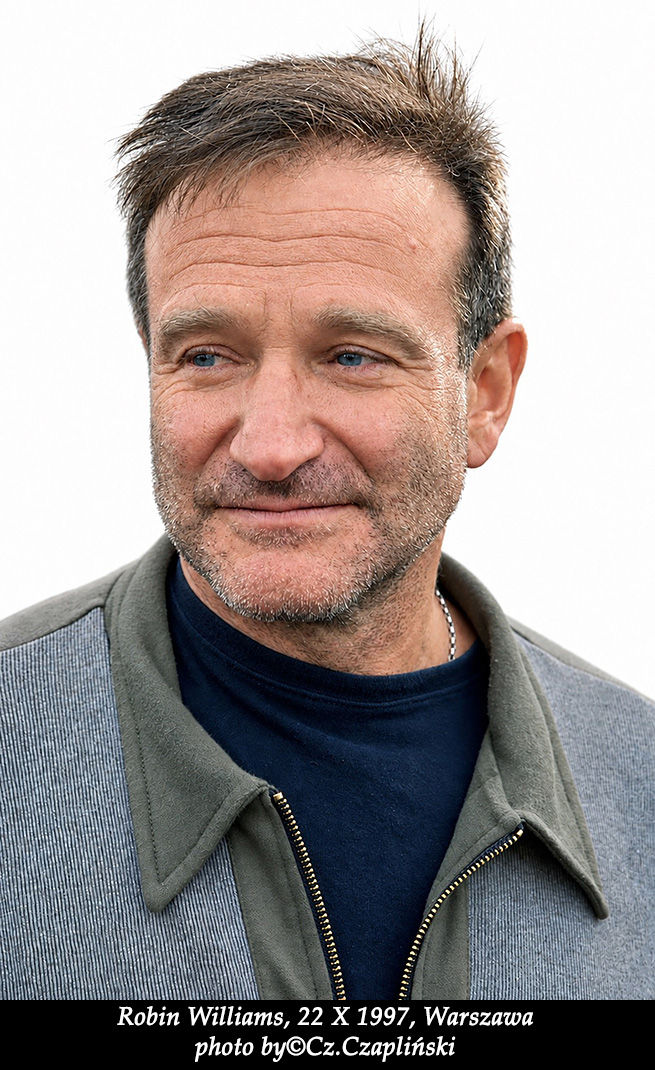
„…Robin Williamsa fotografowałem 22 października 1997 r. na planie filmowym „Jakub kłamca” (Jakob the Liar) w reżyserii Petera Kassovitza. Podczas kręcenia holywoodskiego filmu Robin Williams wraz z żoną Marshą mieszkał w słynnym Grand Hotelu w Łodzi…” – Czesław Czapliński.
Za rolę owdowiałego psychoanalityka Seana Maguire’a w dramacie Buntownik z wyboru (1997) zebrał mieszane recenzje, ale też otrzymał Oscara dla najlepszego aktora drugoplanowego i nagrodę Gildii Aktorów Ekranowych za najlepszy występ aktora w roli drugoplanowej oraz był nominowany do Złotego Globu dla najlepszego aktora drugoplanowego. Za występ w serialu animowanym Great Minds Think for Themselves (1998) otrzymał nominację do nagrody Daytime Emmy dla wyróżniającego się artysty w serialu animowanym. Do końca lat 90. zagrał w chłodno przyjętych przez krytykę filmach: tytułowego bohatera kasowej tragikomedii Patch Adams (1998), Chrisa, lekarza pediatrii pomagającego żonie w przezwyciężeniu depresji po śmierci dzieci, w melodramacie Vincenta Warda Między piekłem a niebem (1998), żydowskiego kupca Jakoba Heyma w dramacie wojennym Jakub kłamca (1999), który poniósł komercyjną porażkę, a także androida Andrew Martina w filmie science-fiction Człowiek przyszłości (1999). Poza tym w 1999 zmienił agencję menedżerską z CAA na Artist Management Group.
W 2000 gościł w talk-show Late Show with David Letterman. Jesienią tego samego roku rozpoczął zdjęcia do filmu Marka Romanka Zdjęcie w godzinę (2002), w którym zagrał Seymoura „Sy” Parrisha, niezrównoważonego psychicznie pracownika sklepu fotograficznego, który prześladuje swoją klientkę i jej rodzinę; za swoją rolę w filmie zebrał przychylne recenzje krytyków. Na początku 2001 wystąpił jako Rainbow Randolph, zepsuty gospodarz popularnego widowiska telewizyjnego dla dzieci, w chłodno przyjętym przez krytyków i widzów filmie Danny’ego DeVito Smoochy. Wiosną i latem tego samego roku pracował na planie dreszczowca Christophera Nolana Bezsenność (2002), amerykańskiej adaptacji norweskiego thrillera Insomnia z 1997, w którym zagrał niebezpiecznego psychopatę Waltera Fincha. W tym okresie zrezygnował z usług agencji Artis Management Group i wznowił współpracę z agencją CAA.
Również na początku lat 2000. powrócił do regularnych występów stand-upowych – od grudnia 2001 przez kolejne kilka miesięcy zagrał serię spektakli po kraju; występy były rejestrowane i ukazały się na albumie koncertowym pt. Robin Williams: Live on Broadway, za który aktor otrzymał nagrodę Grammy za najlepszy album ze słowem mówionym oraz nominacje do nagrody Primetime Emmy za najlepszy indywidualny występ w programie komediowym lub musicalu i najlepszy scenariusz do programu komediowego lub musicalu. Następnie zagrał Alana W. Hakmana w dreszczowcu science-fiction Wersja ostateczna (2004), który okazał się komercyjną klapą, oraz krytycznie przyjętą przez recenzentów rolę upośledzonego w rozwoju sprzątacza w komediodramacie Davida Duchovny’ego Głowa do góry (2004). Porażkę poniósł też niskobudżetowy film Ciało za milion (2004), w którym zagrał Paula Barnella, pechowego pracownika biura podróży, który próbuje uzyskać polisę ubezpieczeniową zaginionego brata, wykorzystując zwłoki znalezione w kontenerze na śmieci.
W 2005 podczas 62. ceremonii wręczenia Złotych Globów otrzymał nagrodę im. Cecila B. DeMille’a za osiągnięcia życiowe. W 2006 zagrał drugoplanową rolę ożywionej figury prezydenta Theodore’a Roosevelta z Amerykańskiego Muzeum Historii Naturalnej w familijnym filmie przygodowym Noc w muzeum, który odniósł komercyjny sukces. W tym samym roku premierę miały trzy filmy z Williamsem w roli głównej, które poniosły artystyczną i komercyjną porażkę: Nocny słuchacz, RV: Szalone wakacje na kółkach i Człowiek roku. Po zakończeniu terapii odwykowej jesienią 2006 wcielił się w kolejne krytycznie ocenione w recenzjach role filmowe: księdza w komedii Licencja na miłość (2007), nauczyciela bezdomnych muzyków w dramacie Cudowne dziecko (2007) i biznesmena w komedii Stare wygi (2008). Po rozstaniu z żoną Marshą w 2008 zamknął firmę produkcyjną Blue Wolf Productions, a po przeprowadzce do Tiburon dał spontaniczne występy stand-upowe w Theockmorton Theatre i Napa Valley Opera House. Powrócił też do roli ożywionej figury prezydenta Theodore’a Roosevelta, grając w filmie Noc w muzeum 2 (2009).

Jesienią 2008 rozpoczął trasę koncertową z programem stand-upowym Weapons of Self Destruction, którą zakończył przedwcześnie na początku 2009 z powodu pogorszenia się jego stanu zdrowia. Po operacji wstawienia zastawki serca w 2009 powrócił do pracy, występując w programie Late Show with David Letterman. Zagrał także główną rolę – Lance’a, sfrustrowanego nauczyciela języka angielskiego, który mieszka z nastoletnim synem – w niskobudżetowym filmie niezależnym Bobcata Goldthwaita Najlepszy ojciec świata (2009). Wznowił również trasę Weapons of Self Destruction po USA, a występy w Waszyngtonie z 20 i 21 listopada zostały zarejestrowane i wyemitowane w programie HBO; otrzymał za niego nominację do nagrody Primetime Emmy za najlepszy telewizyjny program komediowy lub musical. W 2010 wydał album koncertowy, również zatytułowany Weapons of Self Destruction, za który był nominowany do nagrody Grammy za najlepszy album komediowy. W 2011 zagrał Tygrysa w spektaklu Bengalski tygrys w bagdadzkim zoo (reż. Moisés Kaufman) wystawianym w Richard Rodgers Theatre na Broadwayu; choć za swój występ zebrał entuzjastyczne recenzje, spektakl zszedł z afisza po zaledwie 108 przedstawieniach.
W 2012 otrzymał nagrodę Stand-Up Icon podczas gali wręczenia Comedy Award w Nowym Jorku, wystąpił gościnnie w jednym z odcinków serialu Louie i zagrał tytułową rolę w czarnej komedii Choleryk z Brooklynu. W 2013 wystąpił w drugoplanowej roli Dwighta Eisenhowera w biograficznym filmie Kamerdyner oraz został obsadzony w głównej roli Simona Robertsa, współzałożyciela agencji reklamowej w Chicago, w serialu CBS Przereklamowani (2013–2014), który wzbudził umiarkowane zainteresowanie widzów. Zimą 2013 występował z Rickiem Overtonem w improwizowanym spektaklu Set List w klubie komediowym iO West przy Hillywood Boulevard. Ponownie zagrał ożywioną figurę prezydenta Theodore’a Roosevelta, tym razem w komedii Noc w muzeum: Tajemnica grobowca (2014). W latach 70. spotykał się m.in. z aktorką Elayne Boosler. 4 czerwca 1978 ożenił się z tancerką Valerie Velardi, z którą miał syna Zachary’ego „Zaka” Pyma (ur. 11 kwietnia 1983). Nie dochowywał wierności żonie (m.in. w 1984 nawiązał blisko dwuletni romans z kelnerką Michelle Tish Carter) co doprowadziło do rozwodu 6 grudnia 1988. 30 kwietnia 1989 w Lake Tahoe poślubił Marshę Garces (ur. 1957), która była nianią jego syna, a później została osobistą asystentką Williamsa. Mieli córkę Zeldę (ur. 31 lipca 1989) i syna Cody’ego Alana (ur. 25 listopada 1991). Z drugą żoną rozstał się pod koniec 2007 i wziął rozwód w 2008 z powodu „niezgodności charakterów nie do przezwyciężenia”. W październiku 2007 poznał graficzkę Susan Schneider, którą poślubił 22 października 2011 w ośrodku wypoczynkowym Meadowood Napa Valley i z którą pozostał do swojej śmierci.
W latach 70. uzależnił się od alkoholu i narkotyków, m.in. od kokainy, choć w wywiadach zapewniał, że nie przyjmuje żadnych substancji psychoaktywnych. Ograniczył nałóg po śmierci aktora Johna Belushiego w marcu 1982 i narodzinach syna w kwietniu 1983. W 1986 zaczął uczęszczać na psychoterapię. W 2004 powrócił do nałogów, w tym czasie rozważał podjęcie próby samobójczej; w 2006 odbył terapię odwykową w centrum Hazelden Foundation w Newberg. Mierzył się z głęboką depresją. W 2014 zgłosił się do placówki leczenia uzależnień Dan Anderson Renewal Center w Center City w Minnesocie.
Był altruistycznym liberalistą. Angażował się w liczne kampanie i wydarzenia dobroczynne, m.in. pomagał osobom bezdomnym oraz wielokrotnie (od 1986 z przerwami do 2006) współprowadził gale charytatywne Comic Relief z Billym Crystalem i Whoopi Goldberg. Z drugą żoną założył organizację charytatywną Windfall Foundation. Wspierał także społeczność LGBT. W ramach współpracy z United Service Organizations (USO) od 2002 dawał występy stand-upowe członkom amerykańskich sił zbrojnych m.in. w Afganistanie, Iraku, Kuwejcie i Bagram.
13 marca 2009 przeszedł operację wstawienia zastawki serca.
11 sierpnia 2014 przed południem został znaleziony nieprzytomny we własnym domu. W południe stwierdzono zgon aktora. W toku śledztwa ustalono, że zmarł on śmiercią samobójczą, wskutek powieszenia. Na krótko przed śmiercią mierzył się z nawrotem depresji i wykryto u niego chorobę Parkinsona, jednak sekcja zwłok wykazała, że cierpiał na DLB. Ciało Williamsa zostało skremowane, a prochy – rozsypane nad Zatoką San Francisco. 27 września odbyło się nabożeństwo żałobne Williamsa w Curran Theatre w San Francisco.

Od marca 2016 tunel łączący hrabstwo Marin z mostem Golden Gate nosi imię Williamsa. W październiku tego samego roku fundacja SAG-AFTRA otworzyła ośrodek edukacyjno-teatralny Robin Williams Center w Nowym Jorku.
Zespół heavy metalowy Iron Maiden w albumie studyjnym The Book of Souls wydanym 4 września 2015 roku poświęcił utwór "Tears of a Clown" pamięci zmarłego aktora.
„…Nie wiem, co się ze mną dzieje. Już nie jestem sobą – takie słowa miał usłyszeć od Williamsa reżyser Shawn Levy, który pracował z nim na planie ostatniego filmu, "Noc w muzeum. Tajemnice grobowca". Aktor nie dożył premiery…” – Robin Williams.
PORTRAIT with HISTORY Robin McLaurin Williams
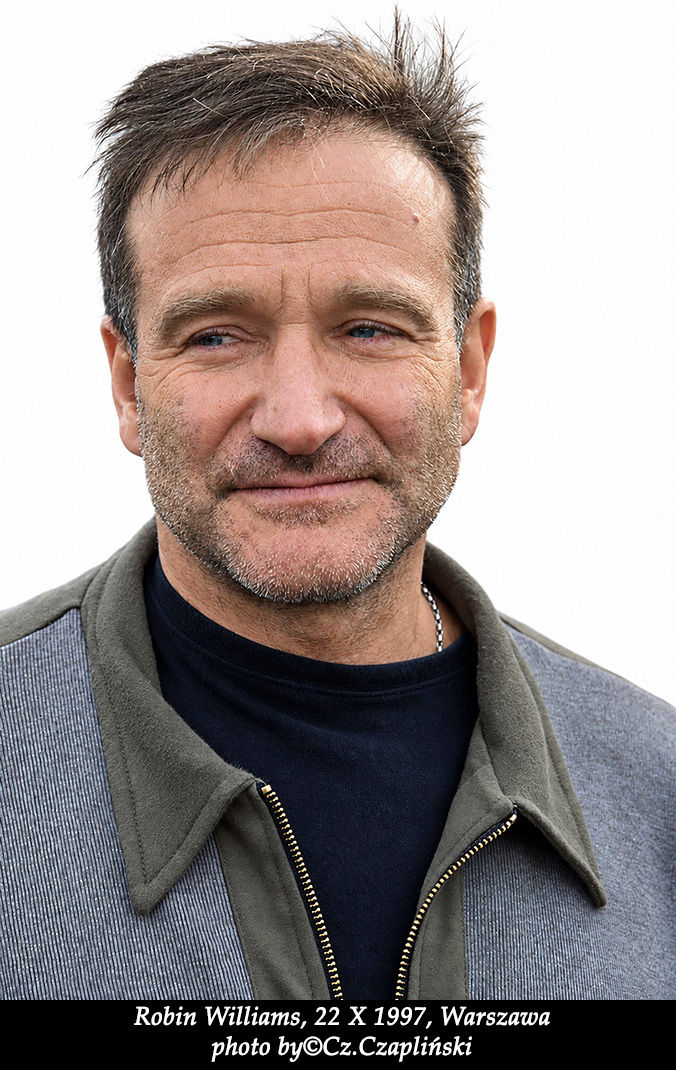
“…You only have to smile to hide a wounded soul, and no one will even notice how much you are suffering…” — Robin Williams.
Robin McLaurin Williams (born July 21, 1951, in Chicago; died August 11, 2014, in Paradise Cay) was an American actor and comedian.
He won the Academy Award for Best Supporting Actor for his portrayal of a psychologist in the drama Good Will Hunting (1997), as well as numerous other honors, including six Golden Globe Awards (two of them special awards) and five Grammy Awards.
On December 12, 1990, he received his own star on the Hollywood Walk of Fame in Los Angeles, located at 6925 Hollywood Boulevard.
Williams was born at Wesley Memorial Hospital in Chicago, Illinois, into a prosperous family. His parents were Laurie McLaurin and Robert Fitz-Gerald Williams, who married on June 3, 1950. His father was a manager at Ford Motor Company, while his mother was a professional model who devoted herself to running the household after her son was born.
Because of his father’s work, the family moved frequently. Williams spent part of his childhood in a house on Washington Road in Lake Forest, Illinois. Later, the family lived at the Stonycroft estate, located at the intersection of Opdyke Road and Woodward Avenue in Bloomfield Hills, a northern suburb of Detroit. In 1968, he moved with his family to Tiburon, California.
He had two half-brothers: Robert “Todd” (1938–2007), his father’s son from his first marriage to Susan Todd Laurent, and Laurin (born in 1947), his mother’s son from her first marriage to William Musgrave. Williams did not meet them until he was about ten years old.
As a child, he was lonely, modest, and sensitive. He lived in a world of his own imagination and imitated his favorite comedians, particularly Jonathan Winters and Danny Kaye. He also collected toy soldiers. In later life, he remained a modest and shy person with low self-esteem. During middle school, he played football and wrestled. In high school, he participated in cross-country running and played on the school’s varsity football team.
Because his family moved so often, Williams attended six different schools over the course of eight years. He studied at Gorton School and later at Deer Path Middle School in Lake Forest. After moving to Bloomfield Hills, he enrolled at the conservative Detroit Country Day School in Beverly Hills. In 1969, he graduated from Redwood High School in Larkspur.
He performed very well academically. After graduating, he earned extra money working at the Trident restaurant and music club in Sausalito. He subsequently studied political science at Claremont Men’s College, an all-male institution in Claremont, but did not complete his studies.
He also attended theater classes at Scripps College and, beginning in the autumn of 1970, studied drama at the College of Marin in Marin County. From 1973 to 1976, he studied acting at the prestigious Juilliard School in New York City, where he received an arts scholarship.
While at college, Williams joined the improvisational group Karma Pie, performing on the Scripps College campus. He also appeared in student productions, including Under Milk Wood and Alice in Wonderland, and in 1970 became a member of a student comedy troupe.
Even at that early stage, he demonstrated a remarkable talent for improvisation, transforming himself into different characters, parodying figures from popular culture, and modulating his voice. He continued to develop his acting skills at the College of Marin, where he appeared in A Midsummer Night’s Dream, The Importance of Being Earnest, and Twelfth Night. He also received favorable reviews in the local press for his performances in The Bald Soprano, Macbeth, You in Your Small Corner and I in Mine, and Fiddler on the Roof.
In 1971, he appeared in a school production of The Taming of the Shrew, which won first prize at a street-theater festival in Edinburgh. He subsequently performed in productions at the Pacific Conservatory of the Performing Arts, including The Caucasian Chalk Circle and The Music Man. Toward the end of 1972, he was cast as Fagin in a school Christmas production of Oliver!, earning further favorable reviews. While studying at Juilliard in New York, he appeared in The Night of the Iguana, A Midsummer Night’s Dream, and Six Characters in Search of an Author. During his time in New York, he began earning his first money as a mime artist.
After returning to San Francisco in the winter of 1976, Williams became active in the local theater community, performing, among other engagements, with the comedy improvisation group Wing. In March 1976, he made his theatrical debut in the play The Lover at the Gumption Theater in San Francisco.

He also refined his stand-up comedy skills under Frank Kidder and admired the work of comedian Richard Pryor. Williams began earning a living through stand-up performances, appearing both solo and with groups associated with the Savoy Tivoli and Old Spaghetti Factory cabaret venues, as well as with the improvisational group Papaya Juice.
In 1976, he finished second in the San Francisco Comedy Competition. To supplement his income, he worked as a bartender at the Holy City Zoo comedy club.
In the autumn of 1976, Williams moved to Los Angeles, where he became a comedian with the improvisational troupe Off the Wall. He performed stand-up at the Bla-Bla Café and the Improv before joining the Comedy Store Players. His performances gradually earned him increasing recognition from both audiences and industry professionals.
He continued to hone his skills and attend comedy workshops. He also signed with the talent agency Rollins, Joffe, Morra & Brenner, which helped him obtain auditions for films and television series. His film debut came in the low-budget movie Can I Do It… ’Til I Need Glasses? (1977). At the invitation of television producer George Schlatter, he appeared on the comedy program Laugh-In. He later performed on NBC’s The Richard Pryor Show and appeared on America 2-Night and The Great American Laugh-Off, where he presented his full stand-up act to a wider audience for the first time.
He also made guest appearances in television series, including Eight Is Enough and Sorority ’62. The turning point in Williams’s career came in 1978, when he made a guest appearance as the alien Mork on the ABC sitcom Happy Days. His appearance proved so popular with viewers that Paramount Pictures created a spin-off series, Mork & Mindy (1978–1982), in which Williams played the male title character.

His performance earned favorable reviews from critics and audiences, and he won a Golden Globe Award for Best Actor in a Television Series — Musical or Comedy.
Williams became widely popular throughout the United States. He was featured in numerous press articles, including those published by Time, TV Guide, and The New York Times. His television character also appeared on a wide range of merchandise, including T-shirts, board games, trading cards, and collectible figurines.
In 1978, he performed an hour-long stand-up special on HBO, Live at the Roxy, and embarked on a national stand-up tour. In the summer of 1979, excerpts from his act were released by Casablanca Records on the album Reality… What a Concept.
The album received enthusiastic reviews in the press, sold more than 500,000 copies, appeared on the Billboard sales chart, and won a Grammy Award for Best Comedy Album.
In March 1979, Williams began facing unfavorable press coverage. Publications including The Insider, the Daily News, and the Chicago Tribune reported allegations that he had appropriated material from other stand-up comedians. Williams explained that, during improvisational performances, he sometimes repeated stories he had heard in comedy clubs without remembering who had originally told them.
Toward the end of the 1970s, his managers considered limiting his television appearances to concentrate on developing his film career.
Williams played the title role in Robert Altman’s musical comedy Popeye (1980). Although the film received mixed reviews, it was a box-office hit, generating approximately $50 million in revenue in the United States.
In 1981, he appeared for the first time on The Tonight Show Starring Johnny Carson. While still working on Mork & Mindy, he played the title character in George Roy Hill’s The World According to Garp (1982), a comedy-drama warmly received by critics and audiences. He was paid $300,000 for the role.
In 1982, Williams appeared in an episode of NBC’s The Billy Crystal Show. After Mork & Mindy ended, he appeared in Eric Idle’s adaptation of The Tale of the Frog Prince for the children’s television series Faerie Tale Theatre. He also became a co-producer and consultant on ABC’s Star of the Family and embarked on another stand-up tour across the United States.
He subsequently starred in the 90-minute comedy special An Evening with Robin Williams (1983) and appeared in Michael Ritchie’s farce The Survivors, which received mediocre reviews and failed commercially, leaving theaters only a month after its premiere.
In 1983, Williams released his second live comedy album, Throbbing Python of Love. It did not repeat the success of his debut album, reaching only No. 119 on the American sales chart, but it received a Grammy nomination for Best Comedy Album.
That same year, Williams played Vladimir Ivanoff, a Soviet circus saxophonist who decides to settle in the United States, in Paul Mazursky’s film Moscow on the Hudson (1984). To prepare for the role, he studied Russian for nearly six months and learned to play the saxophone.
In 1984, he appeared with Eddie Murphy on Saturday Night Live and participated in the charitable event The Night of at Least a Dozen Stars, helping raise funds for the National Committee for an Effective Congress.
In 1985, Williams appeared in Roger Spottiswoode’s comedy The Best of Times (1986), which received favorable reviews but failed commercially. He subsequently appeared in Harold Ramis’s farce Club Paradise, which was poorly received by critics.
On March 24, 1986, he co-hosted the 58th Academy Awards ceremony with Alan Alda and Jane Fonda. Six days later, he joined Billy Crystal and Whoopi Goldberg as a host of the HBO charity concert Comic Relief.

Between film and television projects, Williams continued his stand-up career. In the spring and summer of 1986, he undertook a ten-week tour encompassing performances in 23 American cities and also gave improvised comedy performances at local clubs.
On August 9 and 10, 1986, he became the first solo comedian in history to perform at the Metropolitan Opera House. Excerpts from the show were recorded and broadcast on HBO as An Evening at the Met and subsequently released on the live album A Night at the Met.
In 1986, he played Tommy Wilhelm, an unsuccessful actor experiencing an existential crisis, in the television film Seize the Day (1987), which received critical acclaim. He also auditioned for one of the leading roles in the comedy Midnight Run.
In 1987 and 1988, he won Primetime Emmy Awards for Outstanding Individual Performance in a Variety or Music Program, respectively, for Carol, Carl, Whoopi and Robin and ABC Presents: A Royal Gala.
The breakthrough in his film career came with his portrayal of Armed Forces Radio announcer Adrian Cronauer in Barry Levinson’s commercially successful war comedy-drama Good Morning, Vietnam (1987). His performance earned favorable reviews and numerous awards, including a Golden Globe for Best Actor in a Motion Picture – Musical or Comedy, as well as nominations for the Academy Award for Best Actor and the BAFTA Award for Best Actor in a Leading Role. The film’s soundtrack, which included excerpts from Williams’s DJ performances, earned a Grammy Award for Best Comedy Album. In 1988, he appeared again on Saturday Night Live and announced the winner of the Best Director award at the 60th Academy Awards ceremony. He subsequently played Estragon in Mike Nichols’s production of Waiting for Godot at Lincoln Center Theater in New York. His performance received mixed reviews, and the production closed just six weeks after its premiere. He later made a brief appearance as the King of the Moon in The Adventures of Baron Munchausen (1989), an adaptation of the novel of the same name by Rudolf Erich Raspe and Gottfried August Bürger. In the closing credits, he was listed under the pseudonym “Ray D. Tutto” because his agents did not want the filmmakers to base the film’s promotional campaign solely on Williams’s name.
For his role as John Keating, an unconventional teacher, in Peter Weir’s commercially successful drama Dead Poets Society (1989), Williams received predominantly favorable reviews and nominations for the Academy Award for Best Actor and the Golden Globe for Best Actor in a Motion Picture – Drama. In the first half of 1989, he played the title role in Roger Donaldson’s farce Cadillac Man (1990), which received devastating reviews and failed commercially. In October 1989, he began five months of filming for Penny Marshall’s comedy-drama Awakenings (1990), in which he portrayed Dr. Malcolm Sayer, a physician at a psychiatric hospital. Although critics gave his performance mixed reviews, he received a Golden Globe nomination for Best Actor in a Motion Picture – Drama. Also in 1989, he won a Grammy Award for Best Recording for Children for the album Pecos Bill.

From May to August 1990, Williams played Parry, a troubled homeless man concealing a tragic past, in Terry Gilliam’s comedy-drama The Fisher King (1991). His performance earned him a Golden Globe Award for Best Actor in a Motion Picture – Musical or Comedy and an Academy Award nomination for Best Actor. From February to July 1991, he worked on Steven Spielberg’s commercially successful, although critically panned, film Hook (1991), in which he played the adult Peter Pan, Peter Banning. That same year, Kenneth Branagh’s film Dead Again was released, featuring Williams in one of the few dark roles of his career: a disgraced former psychiatrist forced to work as a grocery-store clerk. He also played an aggressive mime teacher in a supporting role in Bobcat Goldthwait’s low-budget independent film Shakes the Clown(1991).
Williams voiced Batty Koda, a rapping bat, in the animated film FernGully: The Last Rainforest (1992), and the Genie in Walt Disney Pictures’ commercially successful animated feature Aladdin (1992). The Genie character was inspired by Williams’s stand-up performances. For this role, he received a special award for voice acting at the 50th Golden Globe Awards. Unhappy with his collaboration with Disney, which used his voice as the Genie without his knowledge or consent, Williams refused to work on the sequel to Aladdin. In the spring of 1992, he appeared as a guest on The Tonight Show Starring Johnny Carson. He also played Leslie Zevo, the main character in Barry Levinson’s Toys (1992), a film that received a cool reception from critics.
In the 1990s, Williams and his wife founded the production company Blue Wolf Productions. In the spring of 1993, the company began producing Chris Columbus’s comedy-drama Mrs. Doubtfire (1993), based on Anne Fine’s 1988 children’s novel Alias Madame Doubtfire. Williams played Daniel Hillard, an unemployed voice actor who, following his divorce, disguises himself as a kindly housekeeper named Euphegenia Doubtfire so that he can spend more time with his children. The role strengthened his position in the film industry and is regarded as the pinnacle of his career. The film was a commercial success and received mostly favorable reviews. Williams won a Golden Globe Award for Best Actor in a Motion Picture – Musical or Comedy for his performance. He also played a soul reincarnated in different periods of human history in Bill Forsyth’s fantasy film Being Human (1994), which received a lukewarm critical response and failed commercially.
In the spring of 1995, Williams performed a stand-up comedy routine for Bill and Hillary Clinton during the presidential couple’s visit to California. That same year, he played a family father in the second season of NBC’s crime drama series Homicide: Life on the Street, earning a Primetime Emmy nomination for Outstanding Guest Actor in a Drama Series. He also made a brief appearance as a nervous Russian obstetrician in Chris Columbus’s romantic comedy Nine Months. Other roles included an eccentric patron of drag queens in To Wong Foo, Thanks for Everything! Julie Newmar; Alan Parrish in the commercially successful fantasy film Jumanji; and actor Mel in Woody Allen’s Deconstructing Harry (1997).
Williams then played Armand, the owner of a nightclub for drag queens, in Mike Nichols’s comedy The Birdcage (1996), which was warmly received by both critics and audiences. The film was an American remake of the 1978 French film La Cage aux Folles. For his performance, Williams received a Screen Actors Guild Award for Outstanding Performance by a Cast in a Motion Picture. His next film, Jack (1996), a comedy-drama, was savaged by critics. That same year, he played Osric in the film adaptation of William Shakespeare’s Hamlet and appeared as the Assassin in Christopher Hampton’s The Secret Agent (1996).
Williams subsequently portrayed Dale Putley, a suicidal writer, in Father’s Day (1997), a film that received a lukewarm response from critics and audiences. It was an American remake of the 1983 French film Les Compères. To promote the film, Williams appeared in an episode of the television series Friends and was a guest on The Tonight Show with Jay Leno. His performance as Philip Brainard in Flubber (1997), a remake of Walt Disney Pictures’ 1961 film The Absent-Minded Professor, received similarly poor reviews.
“...I photographed Robin Williams on October 22, 1997, on the set of Jakob the Liar, directed by Peter Kassovitz. During the filming of the Hollywood movie, Robin Williams and his wife, Marsha, stayed at the famous Grand Hotel in Łódź...” — Czesław Czapliński.

For his role as Sean Maguire, a widowed psychoanalyst, in the drama Good Will Hunting (1997), Williams received mixed reviews but won the Academy Award for Best Supporting Actor and the Screen Actors Guild Award for Outstanding Performance by a Male Actor in a Supporting Role. He was also nominated for a Golden Globe Award for Best Supporting Actor. His performance in the animated series Great Minds Think for Themselves (1998) earned him a Daytime Emmy nomination for Outstanding Performer in an Animated Program.
By the end of the 1990s, Williams had appeared in several films that received lukewarm critical responses. These included the title role in the commercially successful tragicomedy Patch Adams (1998); Chris, a pediatrician who helps his wife overcome depression following the death of their children, in Vincent Ward’s melodrama What Dreams May Come(1998); Jewish shopkeeper Jakob Heym in the war drama Jakob the Liar (1999), which failed commercially; and the android Andrew Martin in the science-fiction film Bicentennial Man (1999). In 1999, he also changed his management agency from CAA to Artist Management Group.
In 2000, Williams appeared on the talk show Late Show with David Letterman. In the autumn of that year, he began filming Mark Romanek’s One Hour Photo (2002), in which he played Seymour “Sy” Parrish, a psychologically disturbed photo-lab employee who becomes obsessed with a customer and her family. His performance received favorable reviews from critics.
In early 2001, Williams played Rainbow Randolph, a corrupt host of a popular children’s television show, in Danny DeVito’s film Death to Smoochy, which received a lukewarm response from critics and audiences. In the spring and summer of the same year, he worked on Christopher Nolan’s thriller Insomnia (2002), an American adaptation of the 1997 Norwegian thriller of the same name, in which he portrayed the dangerous psychopath Walter Finch. During this period, he left Artist Management Group and resumed working with CAA.
Also in the early 2000s, Williams returned to performing stand-up comedy regularly. Beginning in December 2001, he performed a series of shows across the country over the following several months. The performances were recorded and released on the live album Robin Williams: Live on Broadway. For the album, he received a Grammy Award for Best Spoken Word Album and nominations for Primetime Emmy Awards for Outstanding Individual Performance in a Variety or Music Program and Outstanding Writing for a Variety or Music Program.
He subsequently played Alan W. Hakman in the science-fiction thriller The Final Cut (2004), which was a commercial failure, and portrayed a developmentally disabled janitor in David Duchovny’s comedy-drama House of D (2004), a performance that received critical disapproval. The low-budget film The Big White (2004) also failed commercially. In it, Williams played Paul Barnell, an unlucky travel agent who attempts to claim an insurance payout for his missing brother by using a body found in a dumpster.
In 2005, at the 62nd Golden Globe Awards ceremony, Williams received the Cecil B. DeMille Award for lifetime achievement. In 2006, he played a supporting role as the animated figure of President Theodore Roosevelt from the American Museum of Natural History in the family adventure film Night at the Museum, which was a commercial success. Three other films starring Williams were released that year, all of which failed both artistically and commercially: The Night Listener, RV, and Man of the Year. After completing rehabilitation treatment in the autumn of 2006, Williams took on several more film roles that received negative reviews: a priest in the comedy License to Wed (2007), a teacher of homeless musicians in the drama August Rush (2007), and a businessman in the comedy Old Dogs (2008). Following his separation from his wife, Marsha, in 2008, he closed Blue Wolf Productions. After moving to Tiburon, he gave impromptu stand-up performances at the Throckmorton Theatre and the Napa Valley Opera House. He also returned to the role of the animated President Theodore Roosevelt in Night at the Museum: Battle of the Smithsonian (2009).
In the autumn of 2008, Williams began touring with his stand-up show Weapons of Self Destruction. He ended the tour prematurely in early 2009 because of a deterioration in his health. After undergoing heart valve replacement surgery in 2009, he returned to work, appearing on Late Show with David Letterman. He also starred as Lance, a frustrated English teacher living with his teenage son, in Bobcat Goldthwait’s low-budget independent film World’s Greatest Dad (2009).
Williams resumed the Weapons of Self Destruction tour across the United States. His performances in Washington, D.C., on November 20 and 21 were recorded and broadcast on HBO, earning him a Primetime Emmy nomination for Outstanding Variety, Music or Comedy Special. In 2010, he released a live album, also titled Weapons of Self Destruction, which received a Grammy nomination for Best Comedy Album.
In 2011, Williams played the Tiger in the stage production of Bengal Tiger at the Baghdad Zoo, directed by Moisés Kaufman and staged at the Richard Rodgers Theatre on Broadway. Although his performance received enthusiastic reviews, the production closed after only 108 performances.
In 2012, Williams received the Stand-Up Icon award at the Comedy Awards ceremony in New York, made a guest appearance in an episode of the television series Louie, and played the title role in the black comedy The Angriest Man in Brooklyn. In 2013, he appeared in a supporting role as Dwight D. Eisenhower in the biographical film The Butler. He was also cast as Simon Roberts, a co-founder of a Chicago advertising agency, in the CBS series The Crazy Ones (2013–2014), which attracted a moderate level of audience interest.
In the winter of 2013, Williams performed with Rick Overton in the improvisational show Set List at the iO West comedy club on Hollywood Boulevard. He once again portrayed the animated figure of President Theodore Roosevelt, this time in the comedy Night at the Museum: Secret of the Tomb (2014).
During the 1970s, Williams dated several women, including actress Elayne Boosler. On June 4, 1978, he married dancer Valerie Velardi, with whom he had a son, Zachary “Zak” Pym, born on April 11, 1983. His infidelity, including an affair lasting nearly two years with waitress Michelle Tish Carter that began in 1984, contributed to their divorce on December 6, 1988.
On April 30, 1989, Williams married Marsha Garces (born 1957) in Lake Tahoe. She had been his son’s nanny and later became Williams’s personal assistant. They had a daughter, Zelda, born on July 31, 1989, and a son, Cody Alan, born on November 25, 1991. Williams and Marsha separated in late 2007 and divorced in 2008, citing “irreconcilable differences.”
In October 2007, Williams met graphic designer Susan Schneider. They married on October 22, 2011, at the Meadowood Napa Valley resort and remained together until his death.
During the 1970s, Williams developed an addiction to alcohol and drugs, including cocaine, although in interviews he claimed that he did not use psychoactive substances. He began to curb his substance use after the death of actor John Belushi in March 1982 and the birth of his son in April 1983. In 1986, he began attending psychotherapy. In 2004, he relapsed into addiction and, during that period, considered attempting suicide. In 2006, he underwent rehabilitation at the Hazelden Foundation center in Newberg. He struggled with severe depression. In 2014, he checked into the Dan Anderson Renewal Center, an addiction treatment facility in Center City, Minnesota.
Williams was a philanthropic liberal. He participated in numerous charitable campaigns and events, including helping homeless people. From 1986, with interruptions, through 2006, he repeatedly co-hosted the Comic Relief charity galas with Billy Crystal and Whoopi Goldberg. With his second wife, he founded the charitable organization Windfall Foundation. He also supported the LGBT community. Beginning in 2002, as part of his work with the United Service Organizations (USO), Williams performed stand-up comedy for members of the U.S. armed forces, including in Afghanistan, Iraq, Kuwait, and Bagram.
On March 13, 2009, Williams underwent heart valve replacement surgery.
On the morning of August 11, 2014, Williams was found unconscious in his home. His death was pronounced at noon. An investigation determined that he had died by suicide by hanging. Shortly before his death, he had been experiencing a recurrence of depression and had been diagnosed with Parkinson’s disease. However, an autopsy revealed that he had been suffering from dementia with Lewy bodies (DLB). Williams’s body was cremated, and his ashes were scattered over San Francisco Bay. On September 27, a memorial service was held for Williams at the Curran Theatre in San Francisco.
Beginning in March 2016, the tunnel connecting Marin County with the Golden Gate Bridge has borne Williams’s name. In October of that year, the SAG-AFTRA Foundation opened the Robin Williams Center, an educational and theatrical facility in New York City.
The heavy metal band Iron Maiden dedicated the song “Tears of a Clown” to the memory of the late actor on its studio album The Book of Souls, released on September 4, 2015.
“...I don’t know what’s happening to me. I’m no longer myself.” These were reportedly the words Williams said to director Shawn Levy, who worked with him on the set of his final film, Night at the Museum: Secret of the Tomb. The actor did not live to see its premiere...” — Robin Williams.


Komentarze