PORTRET z HISTORIĄ Bogusław Lustyk

Zaktualizowano: 15 sie


"...Czyste płótno jest dla mnie czymś w rodzaju pola walki, gdzie potykam sie z przeciwnikiem, którym jestem ja sam, z moimi ograniczeniami, kompleksami i niewiarą w sztukę. Czasami wygrywam, ale częściej zostaję pokonany. Nie poddaję się, bo wierzę, że te najważniejsze obrazy jeszcze przedemną. Chciałbym aby moje obrazy mówiły o moich fascynacjach, rozterkach, euforiach i zwątpirniach, mojej wierze i nadziei, mojej sile i słabości. Łącząc dwa tak odległe tematy, jak abstrakcyjna muzyka i ekspresyjne konie, próbuję pokazać to co je łączy a nie co dzieli..." – powiedział Bogusław Lustyk.
Urodził się w 1940 roku w Warszawie. Absolwent Liceum Technik Plastycznych w Bielsku-Białej (rzeźba). Ukończył z wyróżnieniem Wydział Grafiki i Malarstwa warszawskiej Akademii Sztuk Pięknych w 1965 roku. Dyplom w pracowni prof. Józefa Mroszczaka Po studiach uprawiał ilustrację i grafikę książkową. Zdobył około dwudziestu nagród i wyróżnień w ogólnopolskich konkursach na plakat. Brał udział w ponad 80 indywidualnych i grupowych wystawach plakatu i malarstwa m. in. we Francji, Belgii, USA i Australii. Jego międzynarodową karierę rozpoczęła wspólna wystawa w Hanowerze, gdzie prezentował swą twórczość wraz ze znanym rzeźbiarzem niemieckim Johenem Ilem.
Studia w Akademia Sztuk Pięknych w Warszawie. Dyplom z wyróżnieniem na wydziale malarstwa i grafiki w 1965 roku. Uprawia malarstwo, rzeźbę i grafikę użytkową.
Miał kikadziesiąt wystaw indywidualnych w kraju i za granicą, między innymi w: Stanach Zjednoczonych (Nowy Jork, Waszyngton, Atlanta, Chicago, Filadelfia), Niemczech, Szwecji, Finlandii, Francji i Australii.


Z Bogusławem Lustykiem wybitbym artystą, który ciągle poszukuje, spotkałem i zaprzyjaźniłem w Nowym Jorku, ponad dwardzieścia lat temu. Myślę, że pierwsze nasze spotkanie było17 XII 1998 r., tak przynajmniej mówi zdjęcie.
Po olbrzymim sukcesie w wyścigach konnych 124 Kentucky Derby w Louisville, Lustyk przeniósł się i otworzył autorską galerię w Saratoga Springs, na północy stanu Nowy Jork, gdzie odbywają się również wyścigi konne i gdzie odwiedzałem go, patrząc jak radzi sobie w nowym świecie.
Trzeba zdać sobie sprawę czym są Kentucky Derby, które po raz pierwszy miały miejsce w 1875 roku, gonitwa rozgrywana jest w pierwszą sobotę maja, obecnie na dystansie 2 kilometrów i trwa około 2 minut. Z tego powodu w Stanach Zjednoczonych potocznie określa się ją mianem „najbardziej emocjonujących dwóch minut w sporcie”. Gonitwa gromadzi na trybunach przeciętnie około 155 tysięcy widzów. Zaistnieć z tematem końskim, na tego typu imprzie, jest szczytem marzeń. Ciągle mam wrażenie, że Bogdan, nie bardzo zdaje sobie sprawę, co osiągnął?


—Czesław Czapliński: W Ameryce, gdzie oboje spędzamy wiele czasu, mówi się, że artystą może być każdy?
—Bogusław Lustyk: Nie ma jednej drogi do bycia artystą. Najważniejsza jest pasja i na pasji trzeba budować rusztowanie dla twórczości. Jednymi z elementów tego rusztowania jest edukacja artystyczna i doświadczenie, które można zdobywać na wiele sposobów.
Bycie artysta to jest samoświadomość, że się uczestniczy w procesie twórczym, że robi się coś wyjątkowego, a nie zdobywanie dóbr materialnych wynikajacych z wykonywania zawodu.
—Cz.Cz.:Czy w szkole artystycznej można się nauczyć wszystkiego?
—B.L.: Skończyłem Liceum Plastyczne w Bielsku Białej. Było to bardzo dobre liceum, bo w czasach kiedy była moda na naturszczyków ze wschodnich rubieży, wiekszość absolwentów naszego liceum dostawało się na studia. Teraz z perspektywy myślę, że to były jedyne niezmarnowane lata mojej edukacji artystycznej. Cały fundament na którym buduję moją sztukę mam z liceum. To jest umiejetność obserwacji, perfekcję rysowania, a przede wszystkim zaszczepiona mi przez wspaniałego profesora Józefa Klimka wiara w nigdy nie kończący się proces twórczy, z jego bogactwem emocji, uniesień i zwątpień, w desperacką potrzebę obrony własnej wolności - jak koń który raczej zginie niż da się okiełznać.
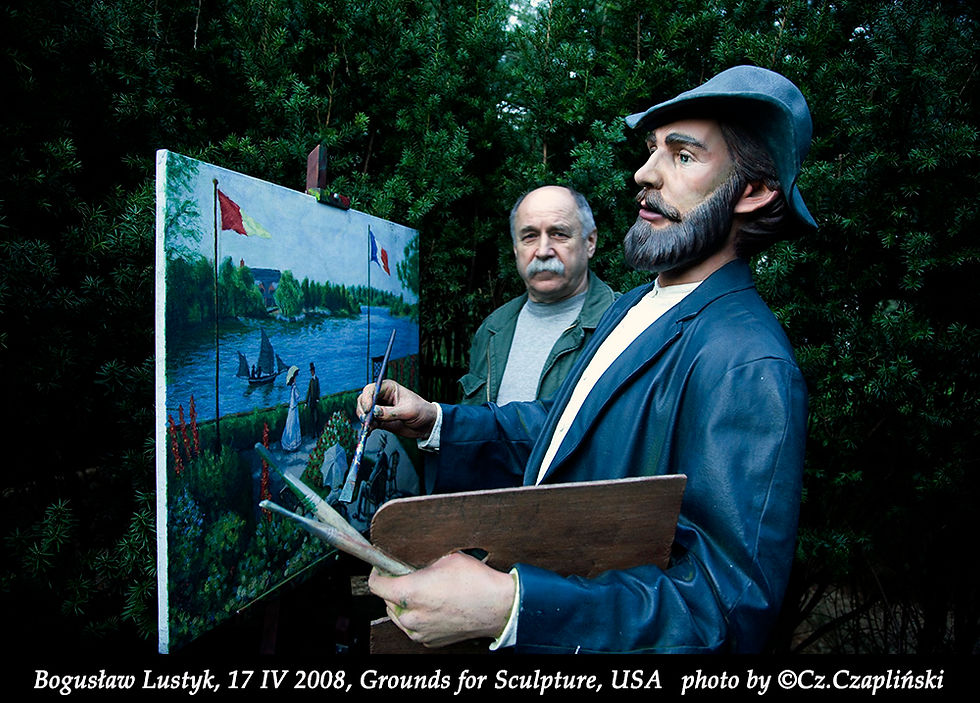


—Cz.Cz.: Poszedłeś potem na warszawskie ASP, czego się tam nauczyłeś?
—B.L.: Tego poczucia z liceum, nie zdołała zabić Akademia Warszawska, w której spedziłem następnie sześć długich lat. Może by jej się to nawet udało, gdyby nie ostatni semestr i dyplom w pracowni prof. Józefa Mroszczaka, który pozostawił mi zupełną swobodę, akceptował moje pomysły i nie przeszkadzał, ukończyć studia z wyróżnieniem.
Dało mi to przepustkę do projektowania plakatów, których zrobiłem około stu, a z których dwadzieścia otrzymało nagrody na konkursach i wystawach. Najważniejsze to te pierwsze, kiedy jeszcze nie myślałem o wygraniu. "Polska zaprasza" i "Do Polski przez cały rok".
—Cz.Cz.: Wystawiałeś plakaty?
—B.L.: Tak. Na wystawach w Polsce na Biennale Plakatu i poza granicą w Belgii, Francji, Włoszech, Rosji, Australii. Najważniejsza wystawa plakatu była w 1972 r., którą nazywam "pośmiertną", a która zamka mój okres plakatowy. Ta decyzja otwiera trwajacy do dzis okres malarstwa w mojej twórczości.
—Cz.Cz.: Skąd konie w twojej twórczości?
—B.L.: To chyba mam w genach. Odkąd sięgam pamięcią moje emocje, moje marzenia zwiazame były z końmi. Konie miały dla mnie jakąś magiczną moc i tragizm. Pierwsze konie jakie widzialem w życiu, to były konie zabite i ranne w czasie wojny. Widok tych bezradnych cierpiących istot, wrył mi się na zawsze w pamięć. Ciagle powracał w moich rysunkach i jak magnes ciągnął mnie do tych zwierząt, położył się piętnem na moim życiu i twórczości.
—Cz.Cz.: Jaki moment uważasz za najważniejszy?
—B.L.: Było kilka ważnych momentów. Na pewno wystawa w Hanowerze wspólnie ze znanym rzeźbiarzem niemieckim Johenem Ihle. To była przepustka do "equestrian art " na poziomie europejskim. Kontynuacją tej drogi były wystawy w Szwecji w1989 i 2000. Odbiór moich prac utwierdził mnie w słuszności ukazywania konia, w całym bogactwie ekspresji, bez typowego sentymentalizmu. Konsekwencją tej postawy była w 1994r. propozycja retrospektywnej wystawy w Muzeum Kentucky Horse Park w Lexington, Kentucky w Stanach Zjednoczonych, największym centrum na świecie. Była to pierwsza tak duża wystawa indywidualna w tym Muzeum i wynikała z chęci pokazania konia w sztuce, w innym niekomercyjnym wymiarze.
Sukces wystawy zaowocował zaproszeniem do otwarcia własnego studia - galerii na terenie Kentucky Horse Park i tytuł Oficjalnego Artysty.


W 1998 moje obrazy zostaly wybrane jako logo 124 Kentucky Derby najsławnieszego wyścigu na świecie, a ja otrzymałem tytuł "Oficjalnego Artysty" tej imprezy (drugi w historii - po sławnym LeRoy Neimanie, a przed równie sławnym Peterem Max). Towarzyszyła temu wydarzeniu wystawa moich prac w Muzeum Kentucky Derby. Prawie wszystkie obrazy z tej wystawy zostaly sprzedane, w cenach od 7 000 do 30 000 dolarów. Największy i najdroższy zakupił do swojej kolekcji Mr. Mike Pegreem, właściciel zwycięskiego konia.
—Cz.Cz.: To ciekawe, że tak gigantyczny sukces w Ameryce, nie został zauważony w Polsce. Potem przeniosłeś się do Saratoga Spring. Gdybyś miał określić swój styl malarstwa?
B.L.: Styl w jakim tworzę, to poetycka ekspresja z dużą dozą abstrakcji. Moja penetracja tematu "koń" idzie dwoma torami: "mistyka" i "ruch". W tych ramach zawiera sie cały mój emocjonalny stosunek do przedmiotu. Staram się respektować jedynie reguły malarstwa bez schlebiania tanim sentymentom. Moje zaangazowanie w ten temat traktuje jako posłannictwo, jako walkę ze sprowadzaniem konia do roli sympatycznego gadżetu.
O słuszności mojej drogi utwierdza mnie świadomość, że w USA, tym maksymalnie skomercjalizowanym kraju, jako jeden z niewielu artystów, żyje wyłacznie ze sztuki, nie malując komercji. Odbiorcami mojej twórczości są w większości lekarze, prawnicy i ludzie biznesu, którzy do nowoczesnych domów, szukają nowoczesnych obrazów, a nie tylko jakiegoś obrazu z koniem.
Mam swoją "Biblię" do której wracam jak do oczyszczajacego źródła inspiracji. To moja książka "O ty, piękno konia". Jest to wybór poezji z moimi grafikam, ukazujący bogactwo wzajemnych relacji konia i człowieka.
—Cz.Cz.: Jaki jest twój stosunek do konia?
—B.L.: Ma podłoże mistyczne. Pierwszymi zapamiętanymi obrazami nie były piękne konie ale konie ranne, stojące na trzech nogach w kałuży krwi. I jakkolwiek potem pszyszło do mnie, i piekno, i siła, i szybkość konii to na te wszystkte piękne konie, cieniem nakłada się wspomnienie tych bezbronnych, cierpiacych i ginących z winy człowieka. Ta świadomość powoduje że nie potrafię widzieć konia w jednym tylko wymiarze i że wszystko się we mnie buntuje przeciwko takiemu malowaniu.
—Cz.Cz.: Kiedy i gdzie widziałeś takie konie?
To bylo podczas wojny w Żarnowie, małym miasteczku gdzie zostaliśmy wysiedleni z Warszawy po powstaniu.
—Cz.Cz.: A twoja fascynacja tańcem?
—B.L.: Moja fascynacja sztuką tańca zaczęła się w Ameryce od spotkania z Alvin Ailey American Dance Theatre i New York City Balet. Zaowocowało to współpracą z National Museum of Dance w Saratoga Springs, a następnie z Teatrem Wielkim ‒ Operą Narodową, gdzie w 2002 roku pokazałem kilkuletnie efekty.
Tutaj swoją twórczość opieram jedynie na intuicji, na budowaniu własnego świata teatru, bez znajomości reguł i detali. Daje to olbrzymią swobodę. To jest jak fala, która zatapia, unosi, wiruje, prawdziwy nieprzewidywalny żywioł.
Bogusław Lustyk niestrudzenie tworzy nowe projekty, ostatnio nawet trójwymiarowe, na pewno nie można sie z nim nudzić. Jak przylatuję do Warszawy, nie wiem co będzie robił nowego.
Uzyskał 25 nagród za twórczość w dziedzinie plakatu i malarstwa, w tym 8 w konkursach organizowanych przez Polski Komitet Olimpijski.
Twórczość Bogusława Lustyka była eksponowana na Olimpiadach w Barcelonie, Atlancie i Londynie.


W 2012 roku realizował w Londynie unikatowy projekt „Malowana Kronika Olimpiady” pod honorowym patronatem Ministra Kultury i Dziedzictwa Narodowego.
Z okazji jubileuszu 150 rocznicy urodzin Fryderyka Chopina przygotował cykl obrazów p.t. „Malowanie Muzyki”, który był eksponowany w Galerii Kordegarda i na Międzynarodowym Festiwalu w Międzyzdrojach (w trakie tych ekspozycji obrazy były interpretowane muzycznie przez Waldemara Malickiego), a także na wystawach w Chicago i Saratoga Springs (w trakcie tych wystaw obrazy były inspiracją do muzycznych improwizacji dla amerykańskich muzyków jazzowych).
W ramach współpracy z Teatrem Wielkim zaprojektował oprawę promocyjną 8. Międzynarodowego Konkursu Wokalnego im. Tadeusza Moniuszki.
W 2014 i 2015 roku dla uczczenia Powstania Warszawskiego wykonał 150 grafik o tematyce powstańczej, które wykorzystał do zrealizowania na Krakowskim Przedmieściu instalacji w formie barykad „Dziś idę walczyć, Mamo” i „Powstańcze Szańce”. Instalacje te spotkały się z ogromnym oddźwiękiem społecznym.
W 2015 roku Bogusław Lustyk obchodził 50-lecie pracy twórczej. Przeglądem dorobku artysty była retrospektywna wystawa w Domu Artysty Plastyka w Warszawie.
Bogusław Lustyk, według mnie, nie powiedział jeszcze ostatniego słowa, obserwujcie go.

PORTRAIT with HISTORY Bogusław Lustyk

"…A blank canvas is for me a kind of battlefield, where I face an opponent who is myself—with my limitations, complexes, and lack of faith in art. Sometimes I win, but more often I am defeated. I do not give up, because I believe that my most important paintings are still ahead of me. I would like my paintings to speak of my fascinations, doubts, euphoria, and moments of uncertainty; of my faith and hope, my strength and weakness. By bringing together two such distant subjects as abstract music and expressive horses, I try to show what connects them rather than what separates them…” — said Bogusław Lustyk.
He was born in 1940 in Warsaw. He graduated from the High School of Fine Arts in Bielsko-Biała, specializing in sculpture. In 1965, he graduated with distinction from the Faculty of Graphic Arts and Painting at the Academy of Fine Arts in Warsaw, receiving his diploma in the studio of Professor Józef Mroszczak. After completing his studies, he worked in illustration and book design. He received approximately twenty awards and distinctions in national poster competitions. He participated in more than 80 solo and group exhibitions of posters and paintings, including exhibitions in France, Belgium, the United States, and Australia. His international career began with a joint exhibition in Hanover, where he presented his work alongside the renowned German sculptor Jochen Il.
He studied at the Academy of Fine Arts in Warsaw, graduating with distinction from the Faculty of Painting and Graphic Arts in 1965. He works in painting, sculpture, and applied graphic design.
He has had several dozen solo exhibitions in Poland and abroad, including in the United States (New York, Washington, Atlanta, Chicago, and Philadelphia), Germany, Sweden, Finland, France, and Australia.
I met Bogusław Lustyk, an outstanding artist who is constantly searching and exploring, and became friends with him in New York more than twenty years ago. I believe our first meeting took place on December 17, 1998—at least, that is what the photograph tells me.

Following his tremendous success at the 124th Kentucky Derby in Louisville, Lustyk moved to Saratoga Springs in upstate New York, where he opened his own gallery. Saratoga Springs is also famous for its horse racing, and I visited him there, watching how he adapted to and found his place in this new world.
It is important to understand what the Kentucky Derby represents. First held in 1875, the race takes place on the first Saturday in May. Today, it is run over a distance of 2 kilometers and lasts approximately two minutes. For this reason, in the United States it is commonly referred to as “the most exciting two minutes in sports.” The race attracts, on average, around 155,000 spectators to the grandstands.
To establish oneself with an equestrian theme at an event of this magnitude is the dream of every artist. I still have the feeling that Bogdan does not fully realize what he achieved.

—Czesław Czapliński: In America, where we both spend a great deal of time, people say that anyone can be an artist?
—Bogusław Lustyk: There is no single path to becoming an artist. The most important thing is passion, and passion must be the foundation on which you build the framework for your creative work. Art education and experience are among the elements of that framework, and both can be acquired in many different ways. Being an artist means being conscious that you are participating in a creative process, that you are doing something unique—not simply acquiring material possessions as a result of practicing a profession.
—Cz. Cz.: Can you learn everything at an art school?
—B. L.: I graduated from the High School of Fine Arts in Bielsko-Biała. It was a very good school because, at a time when there was a fashion for self-taught artists from the eastern borderlands, most of the graduates of our school were admitted to higher education. Looking back now, I think those were the only years of my artistic education that were not wasted. The entire foundation upon which I build my art comes from that school. It taught me the ability to observe, the discipline and perfection of drawing, and, above all, it instilled in me—thanks to the wonderful Professor Józef Klimek—a belief in the never-ending creative process, with all its richness of emotions, elation, and doubts, and in the desperate need to defend one’s own freedom—like a horse that would rather die than be tamed.

—Cz. Cz.: You then went on to the Academy of Fine Arts in Warsaw. What did you learn there?
—B. L.: The sense of purpose I had acquired in high school was not destroyed by the Warsaw Academy, where I then spent six long years. Perhaps it might have been, had it not been for my final semester and my diploma project in Professor Józef Mroszczak’s studio. He gave me complete freedom, accepted my ideas, and did not interfere. Thanks to him, I was able to complete my studies with distinction. This gave me an opportunity to enter the field of poster design. I created around one hundred posters, twenty of which received awards at competitions and exhibitions. The most important ones were the first, when I was not yet thinking about winning: Poland Invites You and To Poland All Year Round.

—Cz. Cz.: Did you exhibit your posters?
—B. L.: Yes. I exhibited them in Poland, including at the International Poster Biennale, and abroad—in Belgium, France, Italy, Russia, and Australia. The most important poster exhibition took place in 1972. I call it my “posthumous” exhibition because it marked the end of my poster period. That decision opened the period of painting in my work, which has continued to this day.
—Cz. Cz.: Where did the horses in your work come from?
—B. L.: I think it must be in my genes. As far back as I can remember, my emotions and dreams have been connected with horses. Horses possessed a kind of magical power and tragedy for me. The first horses I ever saw were horses that had been killed or wounded during the war. The sight of those helpless, suffering creatures was etched permanently into my memory. It kept returning in my drawings and, like a magnet, drew me toward these animals. It left its mark on my life and my art.
—Cz. Cz.: What moment do you consider the most important?
—B. L.: There were several important moments. Certainly, the exhibition in Hanover that I held jointly with the renowned German sculptor Jochen Ihle was one of them. It was my gateway to equestrian art at the European level. The exhibitions in Sweden in 1989 and 2000 continued that path. The reception of my work confirmed my belief that the horse should be presented in all its richness of expression, without the typical sentimentality. The consequence of this approach was an invitation in 1994 to hold a retrospective exhibition at the Kentucky Horse Park Museum in Lexington, Kentucky, in the United States—the largest center of its kind in the world. It was the first major solo exhibition ever held at this Museum and grew out of a desire to present the horse in art from a different, non-commercial perspective. The success of the exhibition resulted in an invitation to open my own studio-gallery on the grounds of the Kentucky Horse Park, as well as being named its Official Artist. In 1998, my paintings were selected as the logo for the 124th Kentucky Derby, the most famous horse race in the world, and I was named the “Official Artist” of the event—the second in its history, after the renowned LeRoy Neiman and before the equally famous Peter Max. The event was accompanied by an exhibition of my work at the Kentucky Derby Museum. Almost all of the paintings from the exhibition were sold, at prices ranging from $7,000 to $30,000. The largest and most expensive painting was purchased for the collection of Mr. Mike Pegreem, the owner of the winning horse.
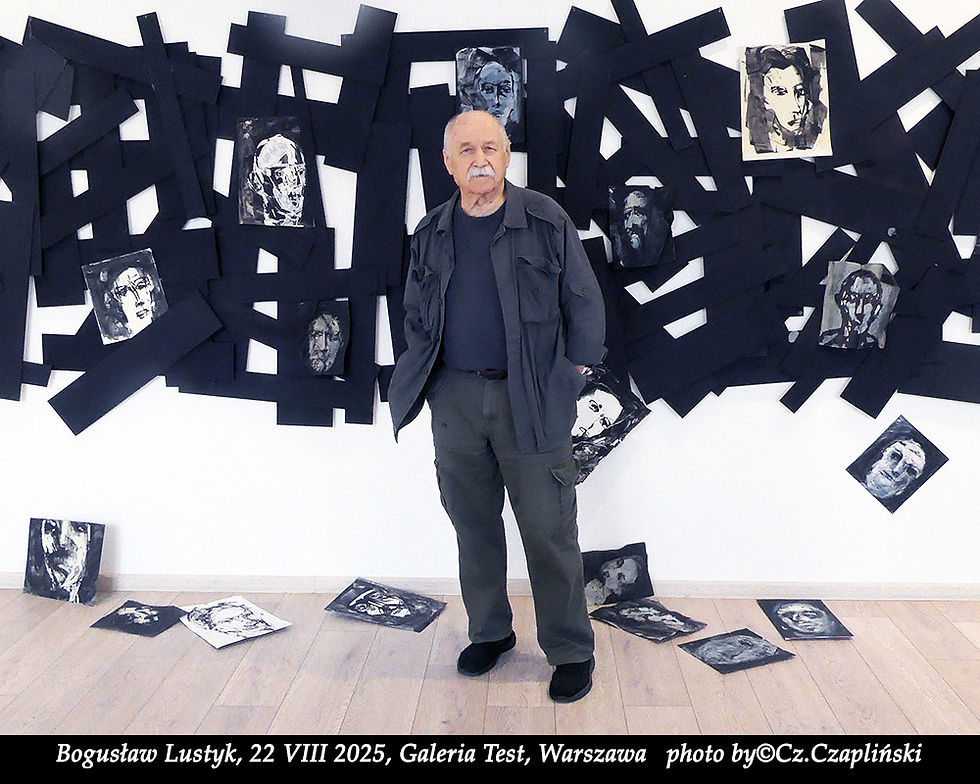
—Cz. Cz.: It is interesting that such a tremendous success in America went virtually unnoticed in Poland. You later moved to Saratoga Springs. How would you describe your painting style?
—B. L.: The style in which I work is poetic expressionism with a strong element of abstraction. My exploration of the subject of the “horse” follows two paths: “mysticism” and “movement.” Within these two frameworks lies my entire emotional relationship with the subject. I try to respect only the rules of painting, without pandering to cheap sentimentality. I regard my commitment to this subject as a mission—as a struggle against reducing the horse to the role of a charming decorative object. I am convinced that I am on the right path by the fact that, in the United States, this highly commercialized country, I am one of the few artists who make a living exclusively from art without producing commercial work. Most of the people who collect my art are doctors, lawyers, and businesspeople who are looking for contemporary paintings for their modern homes—not simply some painting with a horse in it. I have my own “Bible,” to which I return as I would to a purifying source of inspiration. It is my book O ty, piękno konia(O Thou, Beauty of the Horse). It is a selection of poetry accompanied by my graphics, presenting the richness of the mutual relationship between the horse and the human being.

—Cz. Cz.: What is your relationship with the horse?
—B. L.: It has a mystical foundation. My first remembered images were not of beautiful horses, but of wounded horses standing on three legs in pools of blood. And although, later, the beauty, strength, and speed of horses came to me, the memory of those helpless, suffering horses dying through the fault of man is always superimposed like a shadow over all those beautiful horses. This awareness makes it impossible for me to see the horse in only one dimension, and everything in me rebels against painting it that way.

—Cz. Cz.: When and where did you see such horses?
—B. L.: It was during the war, in Żarnów, a small town where we were displaced from Warsaw after the Warsaw Uprising.
—Cz. Cz.: And what about your fascination with dance?
—B. L.: My fascination with the art of dance began in America with my encounters with the Alvin Ailey American Dance Theater and the New York City Ballet. This led to a collaboration with the National Museum of Dance in Saratoga Springs and later with the Teatr Wielki–Polish National Opera, where in 2002 I presented several years’ worth of work. Here, I base my work solely on intuition, on creating my own world of theater, without being bound by rules or details. This gives me tremendous freedom. It is like a wave that floods, carries, and whirls—a truly unpredictable force of nature.

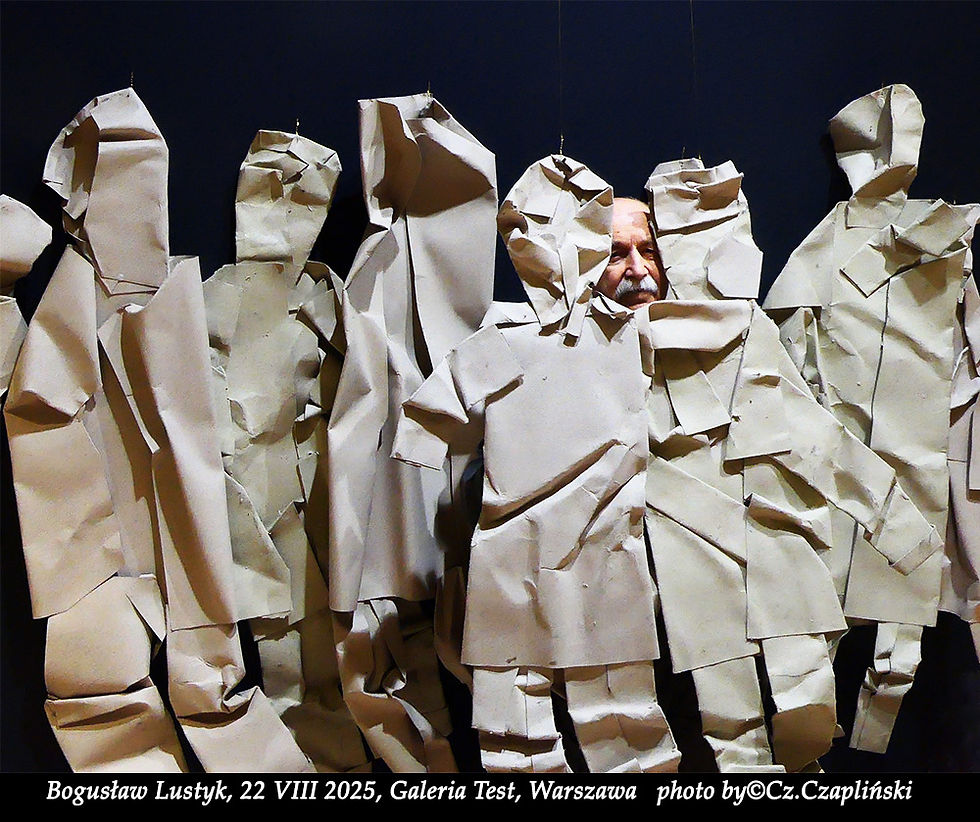
Bogusław Lustyk tirelessly creates new projects, most recently even three-dimensional works. One certainly cannot get bored with him. Whenever I fly to Warsaw, I never know what new project he will be working on.
He has received 25 awards for his work in poster design and painting, including eight awards in competitions organized by the Polish Olympic Committee.
Bogusław Lustyk’s work has been exhibited at the Olympic Games in Barcelona, Atlanta, and London.
In 2012, he carried out a unique project in London entitled “A Painted Chronicle of the Olympics,” under the honorary patronage of the Minister of Culture and National Heritage. To commemorate the 150th anniversary of the birth of Frédéric Chopin, he created a series of paintings entitled “Painting Music,” which was exhibited at the Kordegarda Gallery and at the International Festival in Międzyzdroje. During these exhibitions, the paintings were interpreted musically by Waldemar Malicki. The series was also presented at exhibitions in Chicago and Saratoga Springs, where the paintings served as inspiration for musical improvisations by American jazz musicians.
As part of his collaboration with the Teatr Wielki–Polish National Opera, he designed the promotional visual identity for the 8th International Tadeusz Moniuszko Vocal Competition.

In 2014 and 2015, to commemorate the Warsaw Uprising, he created 150 graphics devoted to the subject of the Uprising. He used them to create two large-scale installations in Krakowskie Przedmieście, Warsaw, designed in the form of barricades:
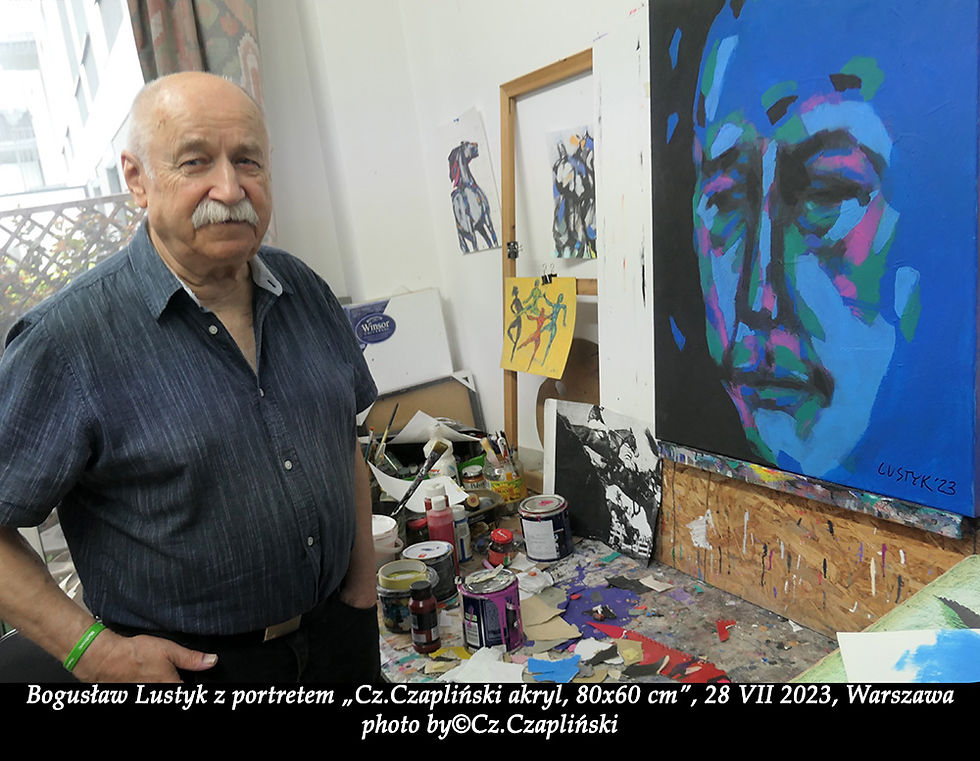
“...Today I Go to Fight, Mama” and “Insurgent Barricades.” These installations received an enormous response from the public. In 2015, Bogusław Lustyk celebrated 50 years of artistic work. A retrospective exhibition at the House of Visual Artists in Warsaw presented a survey of his artistic achievements. In my opinion, Bogusław Lustyk has not yet said his final word. Keep watching him. “…Today (July 28, 2023), I received from the artist Bogusław Lustyk, whom I have been friends with for many years, my portrait, painted by him in his studio in Warsaw. The portrait measures 80 × 60 cm and is an acrylic on canvas. He began painting it last year…” — Czesław Czapliński.


"...Dziś (28 VII 2023 r.) otrzymałem od artysty Bogusława Lustyka, z którym przyjaźnię się od wielu lat, mój portret, namalowany przez niego 80x60 cm, akryl na płótnie w jego studio w Warszawie, który zaczął malować w ubiegłym roku..." – Czesław Czapliński.




Komentarze