PORTRET z HISTORIĄ Alexander Haig
- Czesław Czapliński

- 22 lut
- 7 minut(y) czytania

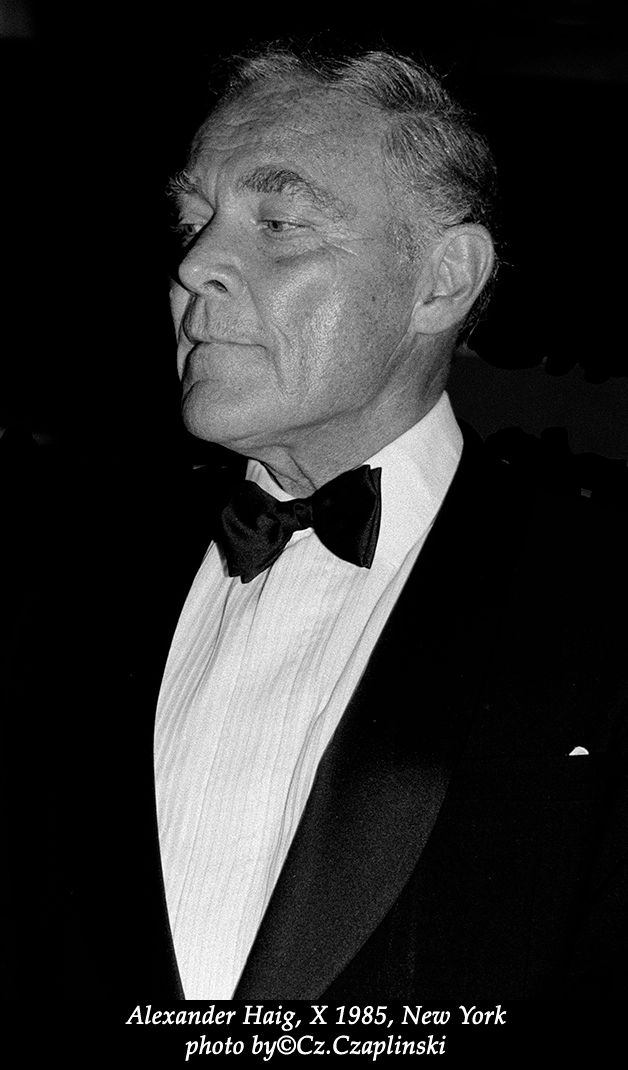
„…Kiedy spoglądam wstecz na okres zimnej wojny, zwłaszcza na jej wczesne lata, na przykład lata 50., w Stanach Zjednoczonych było bardzo dużo sowieckiej propagandy, ale była ona nieudolna i opierała się na znacznym ideologicznym poparciu w niektórych kręgach samej Ameryki…” — Alexander Haig.
Alexander Haig (ur. 2 grudnia 1924 w Filadelfii, zm. 20 lutego 2010 w Baltimore) – amerykański dowódca wojskowy, generał United States Army, naczelny dowódca Połączonych Sił Zbrojnych NATO w Europie (1974–1979), polityk, szef personelu Białego Domu w administracji prezydentów Richarda Nixona i Geralda Forda, sekretarz stanu Stanów Zjednoczonych za prezydentury Ronalda Reagana (1981–1982). Uchodził za polityka umiarkowanego oraz zwolennika odprężenia i według wielu z tego powodu musiał odejść ze stanowiska sekretarza.

Urodził się 2 grudnia 1924 w Filadelfii w stanie Pensylwania. Studiował na Uniwersytecie Notre Dame w stanie Indiana, ale po roku przeniósł się do Akademii Wojskowej West Point, którą ukończył w 1947.
Jako młody oficer został przydzielony do sztabu generała Douglasa MacArthura. W czasie wojny koreańskiej był odpowiedzialny za plan sytuacyjny i meldowanie o działaniach. Następnie został przydzielony do X korpusu, z którym brał udział m.in. w bitwie pod Inchon i pod Chosin. W czasie walk został odznaczony dwiema Srebrnymi Gwiazdami i jedną Brązową Gwiazdą. Po wojnie koreańskiej pracował w Pentagonie, gdzie był m.in. wojskowym doradcą sekretarza obrony Roberta McNamary.

W 1965 objął dowództwo batalionu w 1 Dywizji Piechoty w Wietnamie. Podobnie jak w Korei, Haig wykazał się dużą odwagą za co został nagrodzony m.in. Krzyżem za Wybitną Służbę i Purpurowym Sercem. Został awansowany na pułkownika i został dowódcą brygady w 1 Dywizji Piechoty.
W 1969 został doradcą Henry’ego Kissingera. W 1970 prezydent Richard Nixon mianował go zastępcą doradcy prezydenta ds. bezpieczeństwa narodowego. W 1973 został zastępcą szefa sztabu armii amerykańskiej. W maju tego samego roku został szefem personelu Białego Domu i pełnił tę funkcję do 1974.

W 1974 został naczelnym dowódcą Połączonych Sił Zbrojnych NATO w Europie. Funkcję tę pełnił do 1979. 25 czerwca 1979 był celem zamachu, gdy mina wybuchła pod jego samochodem. Haigowi nic się nie stało, ale jego trzech ochroniarzy zostało rannych. O zamach oskarżono RAF. Za dokonanie zamachu sąd w Niemczech skazał w 1993 Rolfa Clemensa Wagnera na dożywocie.

W 1979 odszedł z wojska i został dyrektorem United Technologies Corporation. W styczniu 1981 został mianowany sekretarzem stanu przez prezydenta Ronalda Reagana.
30 marca 1981, czyli w dniu nieudanego zamachu na Ronalda Reagana, Haig na konferencji prasowej ogłosił, że to on kieruje państwem.
Konstytucyjnie, panowie mamy prezydenta, wiceprezydenta i sekretarza stanu, w tym porządku i jeśli prezydent zdecyduje się przekazać władzę wiceprezydentowi, uczyni to. Jak na razie, ja tu rządzę, w Białym Domu, czekając na powrót wiceprezydenta i będąc z nim w stałym kontakcie. Jeśli coś się stanie, oczywiście skonsultuję się z nim.
Constitutionally, gentlemen, you have the president, the vice president and the secretary of state, in that order, and should the president decide he wants to transfer the helm to the vice president, he will do so. As for now, I’m in control here, in the White House, pending the return of the vice president and in close touch with him. If something came up, I would check with him, of course.

Wypowiedź ta mająca uspokoić społeczeństwo została zinterpretowana jako próba przekroczenia uprawnień przez Haiga. Haig ponadto pomylił się w interpretacji amerykańskiej konstytucji dotyczącej Linii sukcesji prezydenckiej. Zgodnie z nią po prezydencie następuje wiceprezydent, spiker Izby Reprezentantów i przewodniczący pro tempore Senatu USA i dopiero po nim sekretarz stanu.
Po wybuchu wojny o Falklandy, Haig usiłował mediować między rządami Wielkiej Brytanii i Argentyny, ale negocjację się załamały.
Po izraelskiej inwazji na Liban w 1982, krytycy oskarżyli Haiga o to, że ten dał zielone światło Izraelowi, czemu zdecydowanie zaprzeczał. Zrezygnował z pełnienia obowiązków nagle w lipcu 1982. Głównym powodem była niezgoda z Ronaldem Reaganem w kwestii polityki zagranicznej. Plotka głosiła, że pierwsza dama, Nancy Reagan nie przepadała za generałem. Jego urzędowanie było naznaczone scysjami z sekretarzem obrony Casparem Weinbergerem.

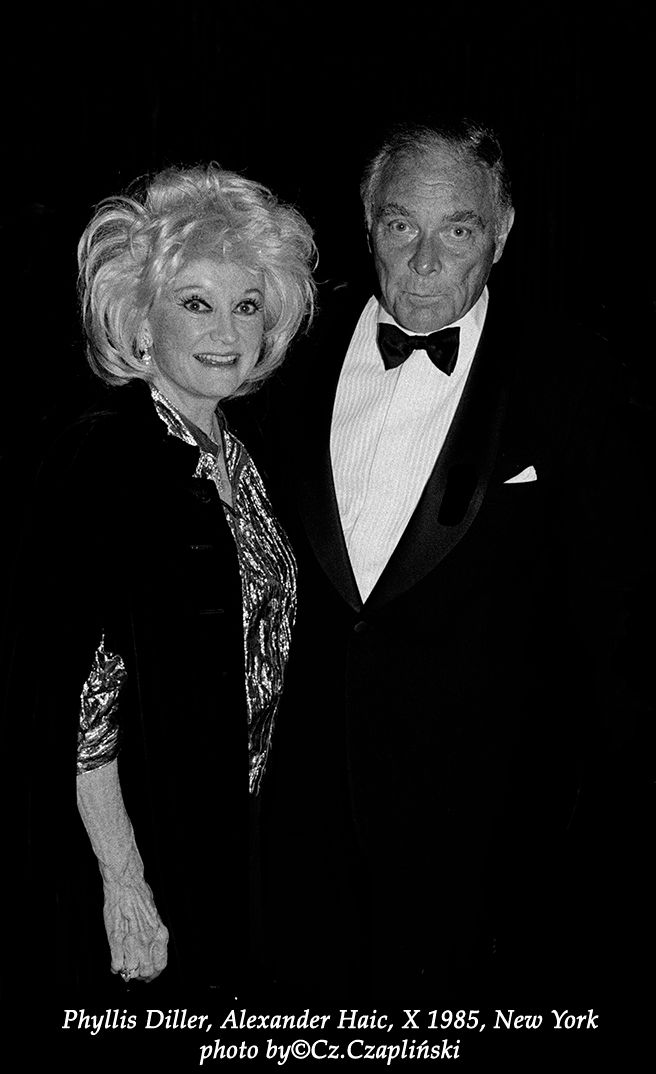
„… Alexandera Haig spotkałem i fotografowałem w październiku 1985 r. w Nowym Jorku, na ekskluzywnym przyjęciu, gdzie była również wybitna aktorka Phyllis Diller - https://www.czczaplinski.com/post/portret-z-historią-phyllis-diller ...” – Czesław Czapliński.
W 1988 bezskutecznie starał się o nominacje prezydencką. Gdy nie uzyskał jej przekazał swoje głosy senatorowi Bobowi Dole’owi. Później Haig zasiadał w zarządach kilku spółek i fundacji jak m.in. America Online, Amerykański Komitet na rzecz pokoju na Kaukazie. Był zdecydowanym krytykiem George’a Busha, uważając go za przywódcę słabego i niezdecydowanego.
Zmarł 20 lutego 2010 w szpitalu w Baltimore, po ponad trzytygodniowej hospitalizacji spowodowanej powikłaniami po nie ujawnionej dokładniej infekcji. Miał 85 lat.

Odznaczenia: • Combat Infantry Badge • Presidential Service Badge • Krzyż za Wybitną Służbę (Distinguished Service Cross) • Defense Distinguished Service Medal – dwukrotnie • Distinguished Service Medal • Srebrna Gwiazda (Silver Star) – dwukrotnie • Legia Zasługi (Legion of Merit) – trzykrotnie • Zaszczytny Krzyż Lotniczy (Distinguished Flying Cross) – trzykrotnie • Brązowa Gwiazda (Bronze Star) – trzykrotnie • Purpurowe Serce (Purple Heart) • Air Medal • Medal Pochwalny Armii (Army Commendation Medal) • American Campaign Medal • World War II Victory Medal • Army of Occupation Medal • National Defense Service Medal – dwukrotnie • Korean Service Medal – pięciokrotnie • Vietnam Service Medal – dwukrotnie • Kawaler Orderu Narodowego Republiki Wietnamu (Wietnam Południowy) • Gallantry Cross Unit Citation (Wietnam Południowy) • Medal „Za kampanię w Wietnamie” (Vietnam Campaign Medal, Wietnam Południowy) • United Nations Korea Medal (ONZ).
„…Ostrzegawczy komunikat, który wysłaliśmy Rosjanom, był celowo dwuznaczny, ale miał być dla nich jasno zrozumiały…”— Alexander Haig.
PORTRAIT with HISTORY Alexander Haig
“…As I look back at the span of the Cold War in those early days, in the '50s, for example, there was a great deal of Soviet propaganda here in the United States, but it was clumsy, and it was anchored to a lot of ideological support in certain circles in America itself…” –Alexander Haig.
Alexander Haig (born December 2, 1924 in Philadelphia, died February 20, 2010 in Baltimore) was an American military commander, a general in the United States Army, Supreme Allied Commander Europe (1974–1979), a politician, White House Chief of Staff in the administrations of Presidents Richard Nixon and Gerald Ford, and United States Secretary of State under President Ronald Reagan (1981–1982). He was regarded as a moderate politician and a supporter of détente and, according to many, had to resign as Secretary of State for that reason.
He was born on December 2, 1924, in Philadelphia, Pennsylvania. He studied at the University of Notre Dame in Indiana but after a year transferred to the United States Military Academy at West Point, from which he graduated in 1947.
As a young officer he was assigned to the staff of General Douglas MacArthur. During the Korean War he was responsible for situation planning and reporting on operations. He was then assigned to X Corps, with which he took part, among other engagements, in the Battle of Inchon and the Battle of Chosin Reservoir. During the fighting he was awarded two Silver Stars and one Bronze Star. After the Korean War he worked at the Pentagon, where he served, among other roles, as a military adviser to Secretary of Defense Robert McNamara.

In 1965 he took command of a battalion in the 1st Infantry Division in Vietnam. As in Korea, Haig displayed considerable bravery, for which he was awarded, among other decorations, the Distinguished Service Cross and the Purple Heart. He was promoted to colonel and became a brigade commander in the 1st Infantry Division.
In 1969 he became an adviser to Henry Kissinger. In 1970 President Richard Nixon appointed him Deputy Assistant to the President for National Security Affairs. In 1973 he became Vice Chief of Staff of the U.S. Army. In May of the same year he was appointed White House Chief of Staff and held that position until 1974.

In 1974 he became Supreme Allied Commander Europe of NATO. He held this position until 1979. On June 25, 1979, he was the target of an assassination attempt when a mine exploded under his car. Haig was unharmed, but three of his bodyguards were injured. The Red Army Faction (RAF) was accused of carrying out the attack. In 1993 a German court sentenced Rolf Clemens Wagner to life imprisonment for the attempt.
In 1979 he left the military and became director of United Technologies Corporation. In January 1981 he was appointed Secretary of State by President Ronald Reagan.
On March 30, 1981, the day of the attempted assassination of Ronald Reagan, Haig announced at a press conference that he was in charge of the government:
“Constitutionally, gentlemen, you have the president, the vice president and the secretary of state, in that order, and should the president decide he wants to transfer the helm to the vice president, he will do so. As for now, I’m in control here, in the White House, pending the return of the vice president and in close touch with him. If something came up, I would check with him, of course.”

This statement, intended to calm the public, was interpreted as an attempt by Haig to exceed his authority. Moreover, he misinterpreted the U.S. constitutional line of presidential succession. According to it, after the president come the vice president, the Speaker of the House of Representatives, and the President pro tempore of the U.S. Senate, and only then the Secretary of State.

After the outbreak of the Falklands War, Haig attempted to mediate between the governments of the United Kingdom and Argentina, but the negotiations collapsed.
Following the Israeli invasion of Lebanon in 1982, critics accused Haig of giving Israel a green light, which he strongly denied. He resigned abruptly in July 1982. The main reason was his disagreement with Ronald Reagan over foreign policy. Rumor had it that First Lady Nancy Reagan did not like the general. His tenure was also marked by disputes with Secretary of Defense Caspar Weinberger.
“… I met and photographed Alexander Haig in October 1985 in New York, at an exclusive party where the renowned actress Phyllis Diller was also present – https://www.czczaplinski.com/post/portret-z-historią-phyllis-diller …” – Czesław Czapliński.

In 1988 he unsuccessfully sought the presidential nomination. When he failed to obtain it, he transferred his delegates to Senator Bob Dole. Later Haig sat on the boards of several companies and foundations, including America Online and the American Committee for Peace in the Caucasus. He was a strong critic of George Bush, whom he considered a weak and indecisive leader.

He died on February 20, 2010, in a hospital in Baltimore after more than three weeks of hospitalization caused by complications from an unspecified infection. He was 85 years old.
Decorations: Combat Infantry Badge; Presidential Service Badge; Distinguished Service Cross; Defense Distinguished Service Medal (twice); Distinguished Service Medal; Silver Star (twice); Legion of Merit (three times); Distinguished Flying Cross (three times); Bronze Star (three times); Purple Heart; Air Medal; Army Commendation Medal; American Campaign Medal; World War II Victory Medal; Army of Occupation Medal; National Defense Service Medal (twice); Korean Service Medal (five times); Vietnam Service Medal (twice); Knight of the National Order of the Republic of Vietnam (South Vietnam); Gallantry Cross Unit Citation (South Vietnam); Vietnam Campaign Medal (South Vietnam); United Nations Korea Medal.

“…The warning message we sent the Russians was a calculated ambiguity that would be clearly understood…”– Alexander Haig.


Komentarze